Why Visit Jokulsarlon for the Northern Lights
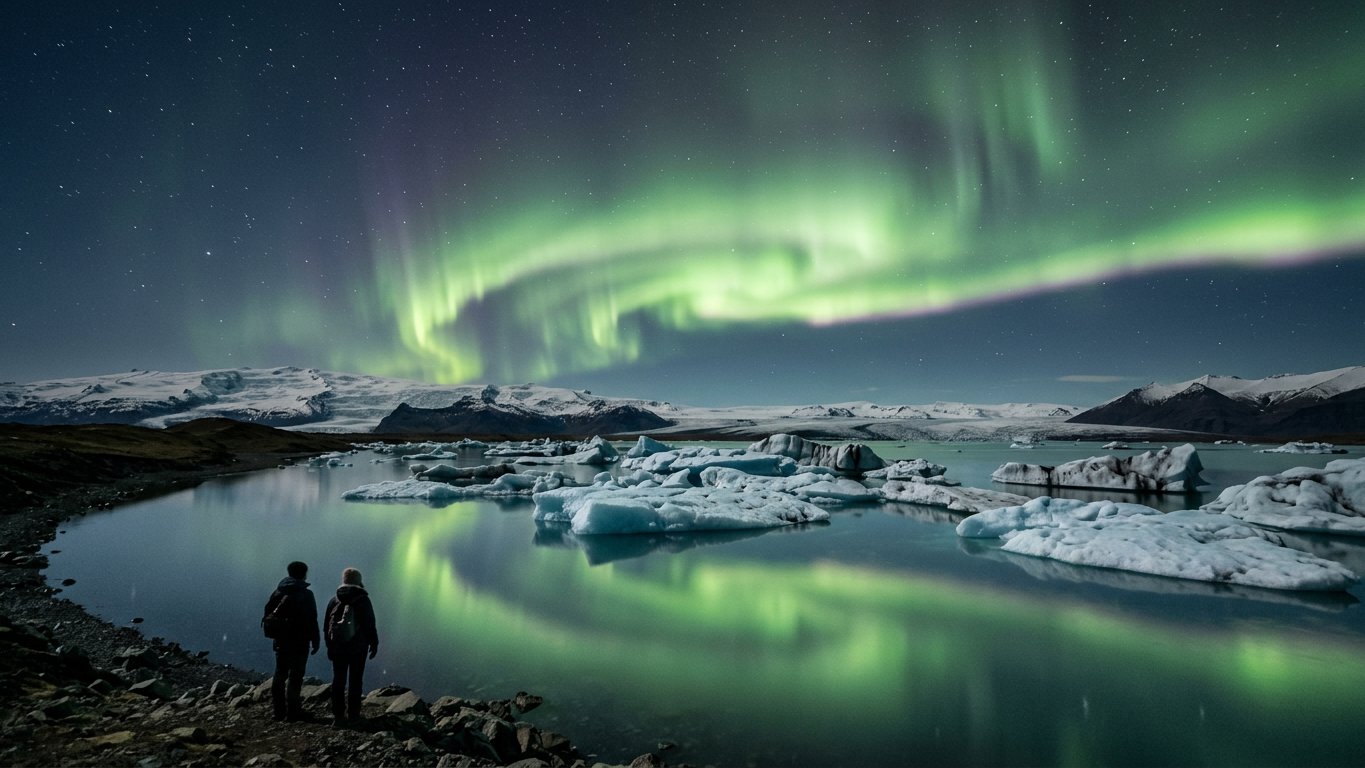
Jokulsarlon glacier lagoon sits at the edge of Vatnajokull National Park, where icebergs calve from Breidamerkurjokull glacier and float in a deep lagoon before drifting toward the ocean. The lagoon spans about 18 square kilometers and reaches depths of 248 meters, creating a dramatic natural stage for aurora displays. Diamond Beach lies directly across the road, where ice chunks wash ashore on black volcanic sand and reflect green and pink auroral light.
The location offers minimal light pollution due to its distance from towns and settlements. The nearest village, Hof, has fewer than fifty residents. This darkness allows the KP index scale to produce vivid displays even at lower KP 2 or KP 3 levels, whereas the same geomagnetic activity might appear faint near Reykjavik's urban glow.
Most visitors combine Jokulsarlon northern lights viewing with daytime glacier activities. Ice caves form in winter under Vatnajokull glacier, accessible from November through March when temperatures stabilize the ice. This seasonal overlap with aurora season from late August to mid-April makes multi-day itineraries practical for those wanting both experiences.
Getting to Jokulsarlon from Reykjavik
The drive from Reykjavik to Jokulsarlon takes approximately five hours along Route 1, the Ring Road that circles Iceland. Tours cover roughly 370 kilometers each way, passing through Vik and Skaftafell before reaching the lagoon. Winter road conditions add time and require appropriate vehicles, which is why super jeep tours are common for aurora trips to the southeast.
Single-day tours from Reykjavik to Jokulsarlon are possible in summer but impractical for northern lights viewing. Aurora hunting requires darkness, which comes late in autumn and winter when daylight lasts only four to six hours. The round trip would total ten hours of driving in darkness, leaving insufficient time to wait for cloud breaks or increased aurora activity.
Instead, multi-day northern lights tours spend two or three nights along the south coast. These itineraries typically include accommodation near Vik or in the Skaftafell area, allowing flexible aurora watching after dinner and before dawn. Tours also visit Skogafoss, Reynisfjara black sand beach, and Svartifoss waterfall during daylight hours.
Book Multi-Day Northern Lights Tours to Jokulsarlon
More tours on GetYourGuideBest Time to See the Aurora at Jokulsarlon
The aurora season at Jokulsarlon runs from late August through mid-April, matching Iceland's period of sufficient darkness. However, ice cave access only opens in November and closes in March when melt begins, creating a narrower window for combined aurora and ice cave tours from November through March.
December and January offer the longest nights, with up to twenty hours of darkness, but also bring the highest chance of winter storms along the south coast. February and March provide a balance of dark hours, improving weather, and stable ice caves. September and October have shorter nights but clearer skies and easier road access before heavy snow arrives.
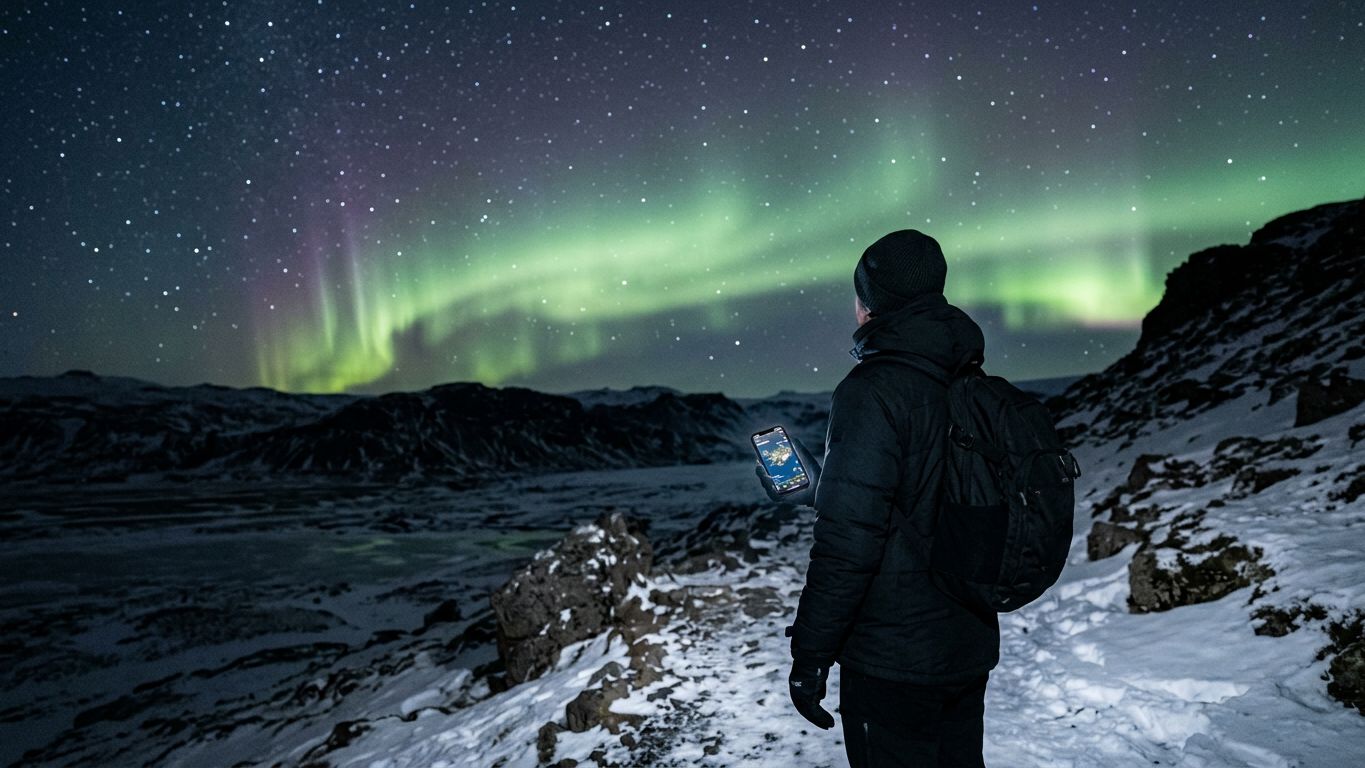
Check the Icelandic Met Office aurora forecast before your trip, which predicts cloud cover and KP index for specific regions. The northern lights forecast for Iceland updates hourly and shows whether the southeast coast has clear conditions. Tours adjust nightly plans based on this forecast, sometimes watching from Vik or Kirkjubaejarklaustur if clouds cover Jokulsarlon.
Multi-Day Tour Options from Reykjavik
Most operators offer two-night or three-night itineraries that include Jokulsarlon aurora viewing. Two-night tours typically drive to Vik on day one with an evening aurora hunt, visit Jokulsarlon and Diamond Beach on day two with a second night of aurora watching near Skaftafell, then return via Seljalandsfoss on day three. Three-night tours add ice cave exploration and extend time along the southeast coast.
Budget tours use guesthouses or farmhouse accommodation and join larger groups of twenty to forty travelers. Mid-range tours book hotels near Vik or Kirkjubaejarklaustur and operate with fifteen to twenty-five participants. Premium options offer small group experiences with eight to twelve guests, superior hotels, and more flexible schedules for aurora photography.
Some itineraries combine Jokulsarlon with the Golden Circle route, visiting Thingvellir National Park, Geysir, and Gullfoss on the first or last day. Others focus entirely on the south coast, spending more time at Reynisfjara, Dyrholaey promontory, and Fjadrargljufur canyon. Winter tours frequently include Vatnajokull ice cave entry as a standard feature.
Photography at Jokulsarlon Under the Aurora
Jokulsarlon provides exceptional foreground elements for aurora photography. Icebergs float in the lagoon year-round, their blue and white shapes reflecting auroral green and purple. Diamond Beach offers ice chunks scattered on black sand at varying distances, allowing compositions with near and far elements under the aurora arc.
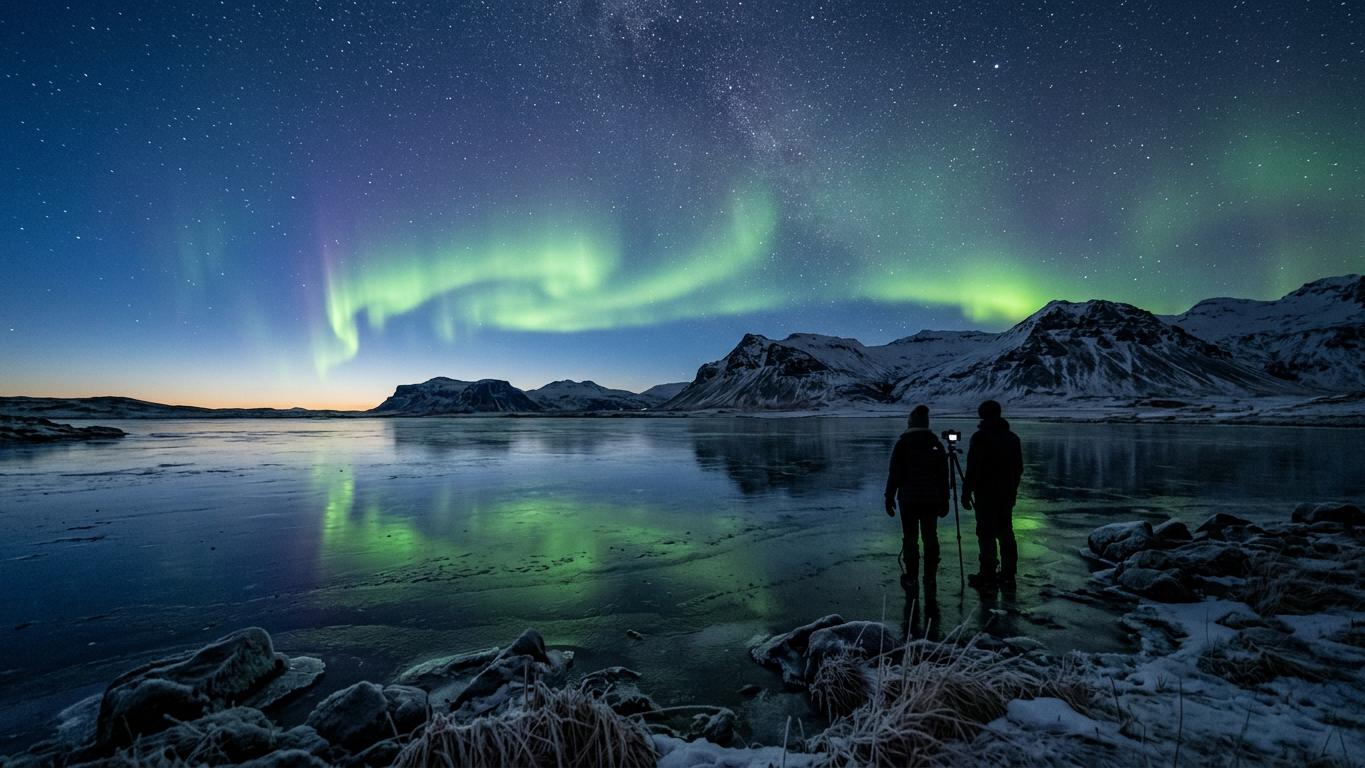
A sturdy tripod is essential for long exposures of ten to twenty seconds. Cameras require manual mode, wide aperture lenses of f/2.8 or wider, and ISO settings between 1600 and 3200 depending on aurora brightness. Most northern lights photography tours in Iceland include instruction on these settings and help with composition at the lagoon.
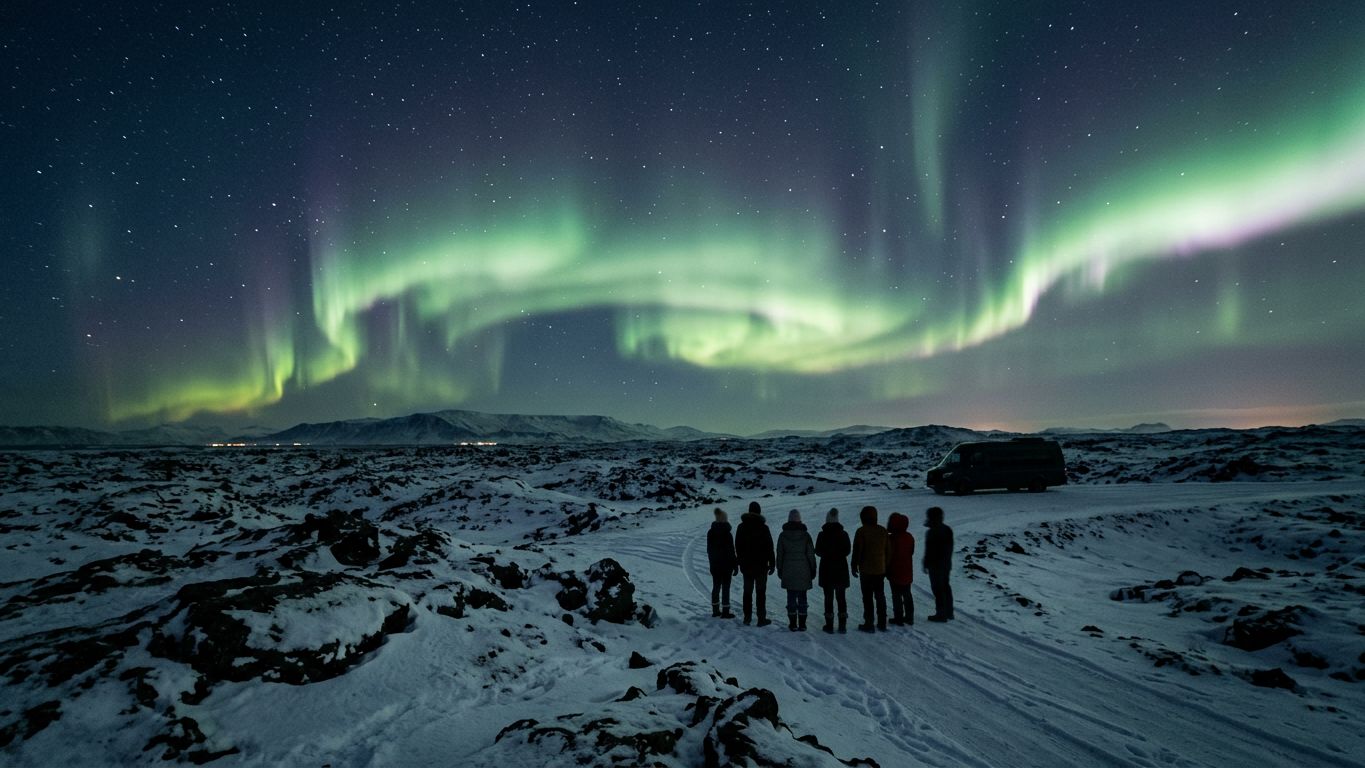
Wind often blows across the open lagoon, making tripod stability crucial. Temperatures at Jokulsarlon average several degrees colder than Reykjavik in winter, typically ranging from minus five to plus two Celsius. Spare batteries drain quickly in cold conditions, so keep extras warm inside your jacket. Tours typically spend one to two hours at the lagoon when aurora activity is visible, then move to Diamond Beach for different perspectives.
What Else to Expect on Jokulsarlon Aurora Tours
Multi-day tours to Jokulsarlon include daytime stops at waterfalls, black sand beaches, and glacier viewpoints along Route 1. Seljalandsfoss and Skogafoss waterfalls lie two to three hours east of Reykjavik, often visited on day one. Reynisfjara black sand beach with its basalt columns sits near Vik, roughly 180 kilometers from the capital.
Ice cave tours operate as separate activities, usually requiring a drive inland from Jokulsarlon toward Vatnajokull glacier. Caves form naturally each winter in different locations, so access points change annually. Tours use modified super jeeps or trucks to reach cave entrances, then spend thirty to forty-five minutes inside the blue ice formations. These excursions take place during daylight hours, leaving evenings free for aurora watching.
Accommodation near Jokulsarlon is limited to a handful of guesthouses and one hotel at Hof. Most tours stay in Vik or Kirkjubaejarklaustur, which offer more lodging options and restaurants. Evening aurora hunts depart from these bases, driving twenty to forty minutes to dark-sky locations including Jokulsarlon when cloud forecasts favor the southeast. Similar to tours exploring the south coast for northern lights, operators remain flexible and chase clear skies rather than committing to a single location.
Practical Considerations for Winter Travel
Winter road conditions between Reykjavik and Jokulsarlon require appropriate vehicles and experienced drivers. Ice, snow, and strong crosswinds are common from November through March. Tours use vehicles equipped with studded tires and experienced guides familiar with Route 1 winter hazards.
Pack warm layers including thermal base layers, insulated jacket, waterproof outer shell, hat, gloves, and sturdy boots with good traction. Temperatures at the coast rarely drop below minus ten Celsius, but wind chill makes conditions feel significantly colder near the lagoon. Tours typically provide some waiting time in heated vehicles between aurora viewing sessions.
Flexibility is important for aurora viewing at any location. Cloud cover, snow, or low geomagnetic activity can prevent sightings on any given night. Multi-day tours increase your chances by offering multiple nights in dark-sky areas. If you're considering shorter trips closer to the capital, northern lights bus tours from Reykjavik provide single-evening options, though without Jokulsarlon's dramatic scenery or low light pollution.
Frequently asked questions
Can you see the northern lights at Jokulsarlon glacier lagoon in Iceland?
Yes, Jokulsarlon offers excellent northern lights viewing from late August through mid-April due to its location far from light pollution. The glacier lagoon and Diamond Beach provide dramatic foregrounds for aurora displays, with icebergs and black sand reflecting the green and pink colors. Most visitors see the aurora here on multi-day tours that spend two or three nights along the south coast, as the location lies roughly five hours from Reykjavik.
How long does it take to drive from Reykjavik to Jokulsarlon for northern lights tours?
The drive takes approximately five hours covering 370 kilometers along Route 1, Iceland's Ring Road. Single-day trips are impractical for aurora viewing because the round trip requires ten hours of winter driving, leaving insufficient time to wait for clear skies or increased aurora activity. Multi-day tours solve this by including overnight stays near Vik or Skaftafell, allowing flexible evening and pre-dawn aurora watching.
What is the best month to see northern lights at Jokulsarlon and visit ice caves?
February and March offer the best combination of northern lights viewing and ice cave access at Jokulsarlon. Ice caves under Vatnajokull glacier open in November and close in March, creating a November-through-March window. February and March balance long dark hours with improving weather and stable ice conditions, while December and January have longer nights but more frequent storms along the south coast.
Are multi-day tours to Jokulsarlon better than single-night northern lights tours from Reykjavik?
Multi-day tours to Jokulsarlon provide significantly better aurora viewing opportunities due to lower light pollution and multiple nights in dark-sky locations. Single-night tours from Reykjavik typically visit areas within one hour of the capital, where urban glow reduces aurora visibility. Jokulsarlon's remote location allows vivid displays even at lower KP levels, and spending two or three nights increases your chances of encountering clear skies and active aurora.
What camera settings should I use for northern lights photography at Jokulsarlon glacier lagoon?
Use manual mode with a wide aperture of f/2.8 or wider, ISO between 1600 and 3200, and shutter speeds of ten to twenty seconds depending on aurora brightness and movement. A sturdy tripod is essential due to wind across the open lagoon, and spare batteries are necessary because cold temperatures drain power quickly. Many photography-focused tours include instruction on these settings and composition techniques using icebergs and Diamond Beach as foregrounds.
Can you combine Jokulsarlon northern lights viewing with ice cave tours in the same trip?
Yes, most multi-day winter tours combine both experiences because ice cave season overlaps with aurora season from November through March. Ice cave tours operate during daylight hours, typically in the morning or early afternoon, while northern lights viewing happens after dark. Tours spend two or three nights along the south coast, allowing time for glacier activities, waterfall visits, and flexible evening aurora hunts based on weather forecasts.
How cold does it get at Jokulsarlon when watching the northern lights in winter?
Temperatures at Jokulsarlon typically range from minus five to plus two Celsius in winter, several degrees colder than Reykjavik. Wind chill across the open lagoon makes conditions feel significantly colder, so layered clothing including thermal base layers, insulated jacket, waterproof shell, hat, and gloves is essential. Tours provide waiting time in heated vehicles between viewing sessions, and most aurora watching lasts one to two hours when displays are visible.
Do Jokulsarlon northern lights tours guarantee aurora sightings or offer refunds if you don't see them?
No tours can guarantee northern lights sightings because aurora displays depend on solar activity and weather conditions beyond any operator's control. However, multi-day tours to Jokulsarlon significantly increase your chances by offering multiple nights in areas with minimal light pollution and flexible itineraries that chase clear skies. Operators monitor aurora forecasts and cloud cover predictions from the Icelandic Met Office, adjusting nightly viewing locations to maximize visibility opportunities.