The Aurora Season in Iceland
Iceland's northern lights season runs from approximately 20 August to 15 April each year. Outside this window, the midnight sun and near-continuous twilight make aurora viewing impossible even when geomagnetic storms occur. The season boundaries align with the return of sufficient darkness rather than solar activity, which continues year-round.
The aurora oval remains active throughout the season, but your viewing success depends on the intersection of three factors: darkness duration, cloud cover patterns and geomagnetic activity measured on the KP index scale from 0 to 9. Tours typically operate from early September through early April, with most operators running nightly departures during peak winter months.
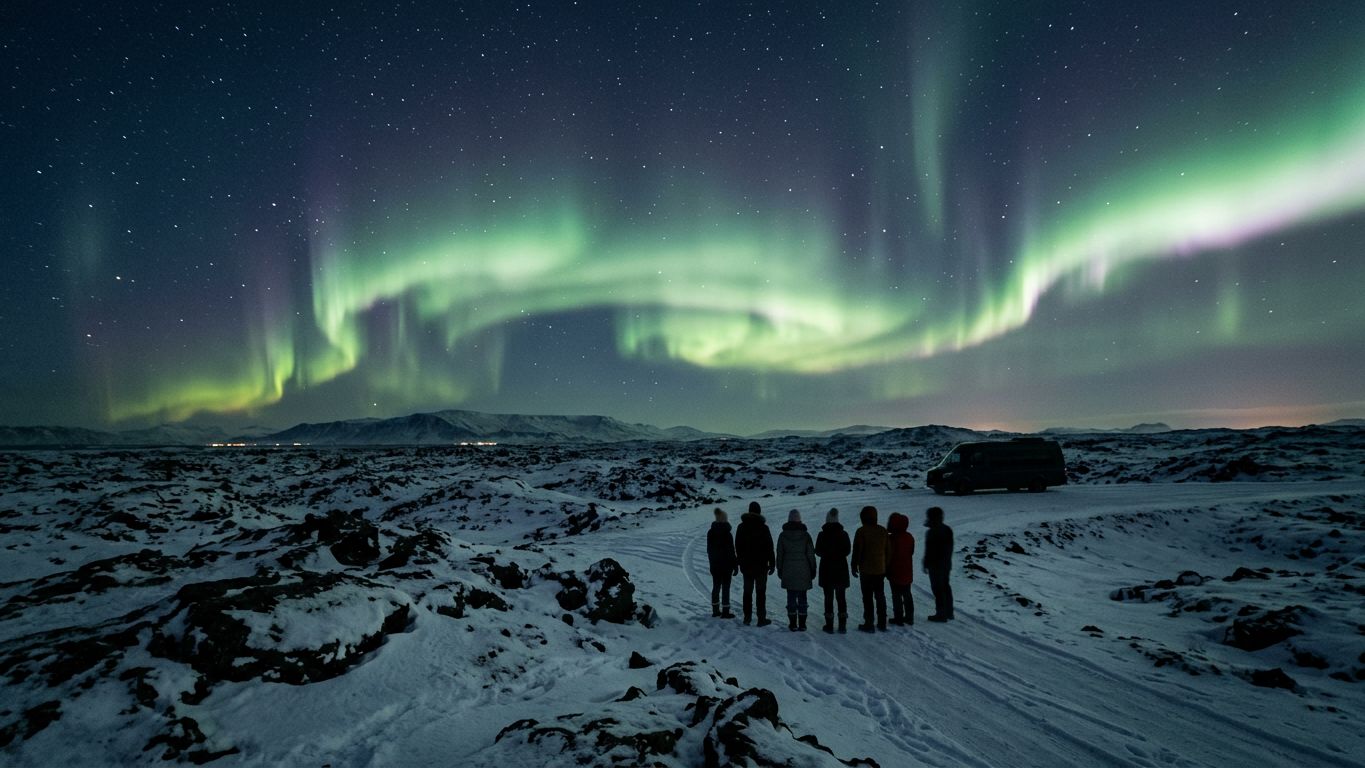
Reykjavik serves as the departure point for most northern lights tours from the capital, though the city's light pollution means tours travel 30 to 90 minutes outside the urban area. Popular destinations include Thingvellir National Park, which lies about 45 minutes from Reykjavik and has almost no light pollution, minimal terrain obstruction and good road access year-round.
Darkness Hours Through the Season
The duration of darkness directly determines your viewing window each night. In late August, full darkness lasts only three to four hours. By the December solstice, Iceland experiences around 19 hours of darkness, with civil twilight ending before 16:00 and returning after 11:00 the following morning.
September and April bookend the season with shorter darkness periods, typically five to six hours in September and six to eight in April. October through March offer the longest viewing windows, with October providing roughly 12 hours of darkness, November 16 hours, and January through February matching December's extended night.
Most operators schedule tours to depart Reykjavik between 20:00 and 21:30, reaching dark-sky locations by 21:00 to 22:00. The hours between 22:00 and 02:00 statistically show the highest aurora activity due to the alignment of Iceland's position relative to the midnight sector of the aurora oval. Early-season and late-season tours often return earlier due to dawn arriving before 03:00.
Book Northern Lights Tours from Reykjavik
More tours on GetYourGuideEquinox Periods and Geomagnetic Activity
The spring and autumn equinoxes in late March and late September coincide with elevated geomagnetic activity. The Russell-McPherron effect causes the Earth's magnetic field to align more favourably with the solar wind during these periods, increasing the frequency and intensity of geomagnetic storms.
September and March therefore offer a statistical advantage for aurora viewing, though this benefit applies across the entire month rather than just the equinox dates themselves. September aurora hunting combines equinox activity with milder temperatures and accessible roads, while March viewing pairs similar geomagnetic conditions with longer darkness hours and improving weather as winter transitions to spring.
The equinox effect does not guarantee sightings, as local weather remains the limiting factor. A clear-sky night in November with KP 2 activity produces better results than a cloudy March night during a KP 5 storm.
Moon Phase and Sky Darkness
The lunar cycle affects viewing conditions, particularly for faint auroras at KP 0 to KP 2. A full moon brightens the sky enough to wash out subtle green bands, while a new moon provides the darkest conditions for photography and observing dim displays.
Moonlight becomes less relevant during strong geomagnetic storms at KP 3 and above, when the aurora's brightness easily overcomes lunar interference. Most visitors accept moonlit conditions rather than restricting their trip to new-moon dates, since weather and geomagnetic activity carry more weight in determining success.
Tour operators run departures regardless of moon phase, and many photographers prefer a crescent or quarter moon to illuminate foreground landscapes. The moon's position below the horizon for part of the night creates a natural viewing window even during fuller phases.
Weather Patterns and Cloud Cover
Cloud cover blocks aurora viewing more consistently than any other factor. Iceland's maritime climate brings frequent low-pressure systems, particularly from October through February when Atlantic storms track across the island. Coastal areas including Reykjavik experience more cloud cover than interior regions.
The Icelandic Met Office aurora forecast provides cloud cover predictions up to three days ahead, allowing tour operators to select the clearest available locations each night. Tours may travel east toward Thingvellir, south along the coast, or west toward Snaefellsnes depending on forecast conditions.
Winter months from December through February bring the coldest temperatures and most stable high-pressure systems when they occur, sometimes producing multi-day clear-sky windows. These months also carry the highest risk of road closures and tour cancellations due to snow and wind.
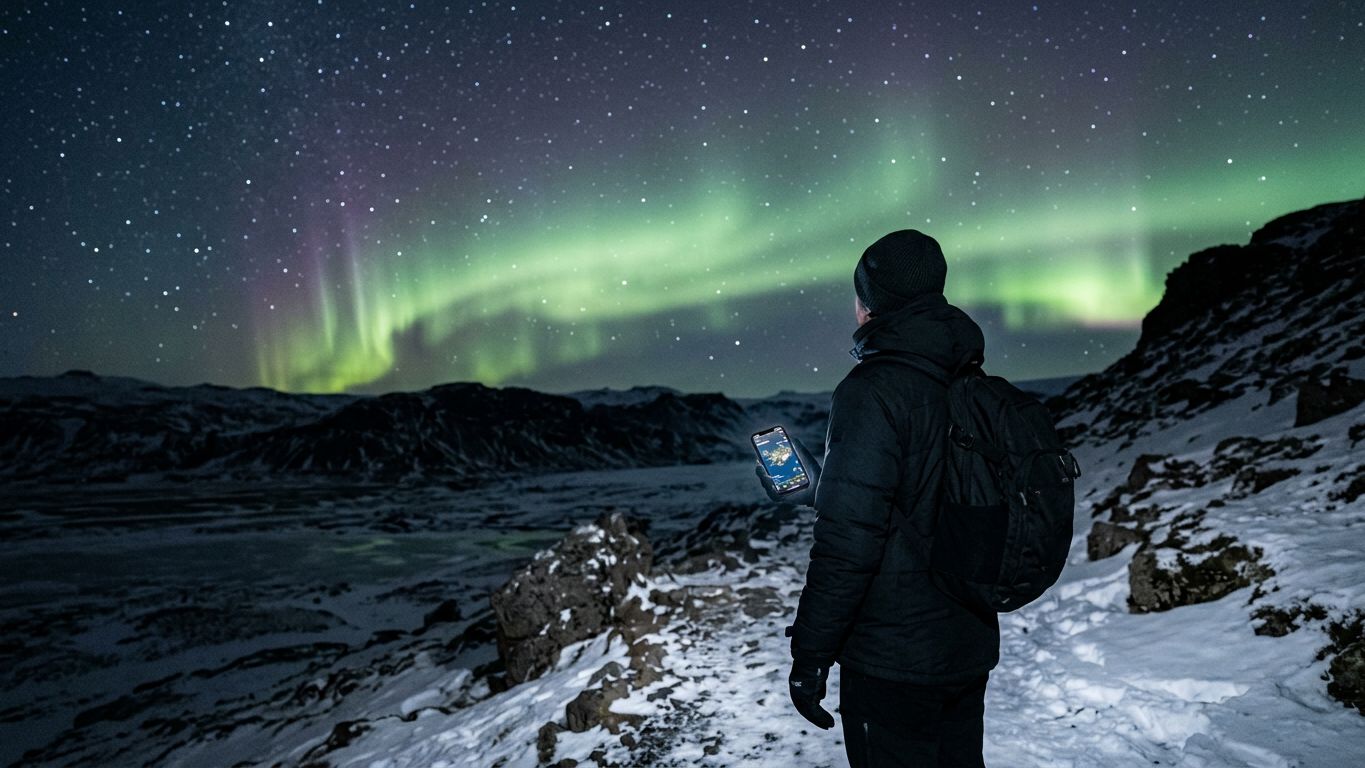
Understanding the aurora forecast helps you track both geomagnetic activity and cloud predictions, giving you the information needed to decide whether to book a tour on any given night.
Best Time to See Northern Lights in Iceland: Monthly Comparison
| Month | Darkness Hours | Weather | Activity | Crowds |
|---|---|---|---|---|
| September | 5-10 hours | Mild, variable | Equinox boost | Moderate |
| October | 10-14 hours | Cooling, wet | Good | Moderate |
| November | 16-18 hours | Cold, stormy | Good | Low |
| December | 19-20 hours | Cold, variable | Good | Moderate-High |
| January | 19-20 hours | Coldest, snow | Good | Moderate |
| February | 16-18 hours | Cold, improving | Good | Moderate |
| March | 12-16 hours | Warming, variable | Equinox boost | High |
| April | 6-12 hours | Mild, clearer | Fair | High |
Each month presents trade-offs between darkness duration, weather probability and travel conditions. January and February maximize darkness hours but bring challenging weather, while September and April offer easier travel with shorter viewing windows.
Optimal Viewing Hours Each Night
Aurora activity peaks between 22:00 and 02:00 local time across the season. This window corresponds to the magnetic midnight sector when Iceland's position relative to the aurora oval reaches its most favourable alignment. Tours typically spend two to four hours in dark-sky locations during this period.
Activity can occur outside these hours, particularly during strong geomagnetic storms when displays last six hours or longer. Early displays beginning around 20:00 happen occasionally, while pre-dawn activity after 03:00 requires you to monitor forecasts independently since most tours return to Reykjavik by 01:00.
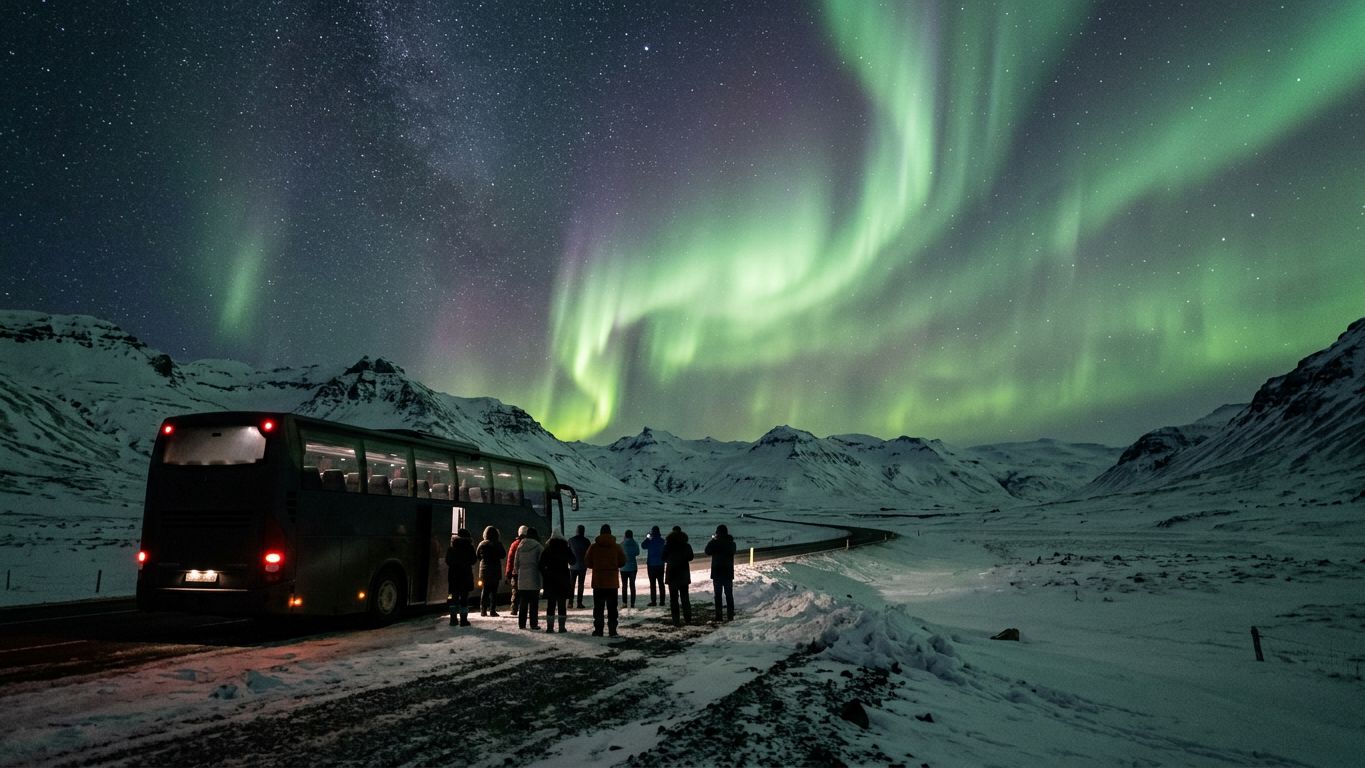
Different tour formats serve different schedules and preferences. Standard bus tours depart around 21:00 and return by midnight, while small-group departures often extend until 01:00. Private tours offer flexible timing, and multi-day itineraries include several nights of hunting across different regions.
Combining Aurora Viewing With Other Activities
Many visitors combine aurora hunting with daytime sightseeing during the winter months. Golden Circle day tours pair naturally with evening aurora tours, as do visits to the Blue Lagoon and south coast waterfalls. Some operators offer combined itineraries such as Golden Circle and northern lights tours or aurora tours with hot spring visits.
Extended trips allow you to visit remote locations with exceptional aurora potential. Jokulsarlon glacier lagoon lies roughly five hours east of Reykjavik and offers dark skies with dramatic ice formations, while Kirkjufell mountain on Snaefellsnes peninsula provides one of Iceland's most photographed aurora foregrounds two and a half hours north of the capital.
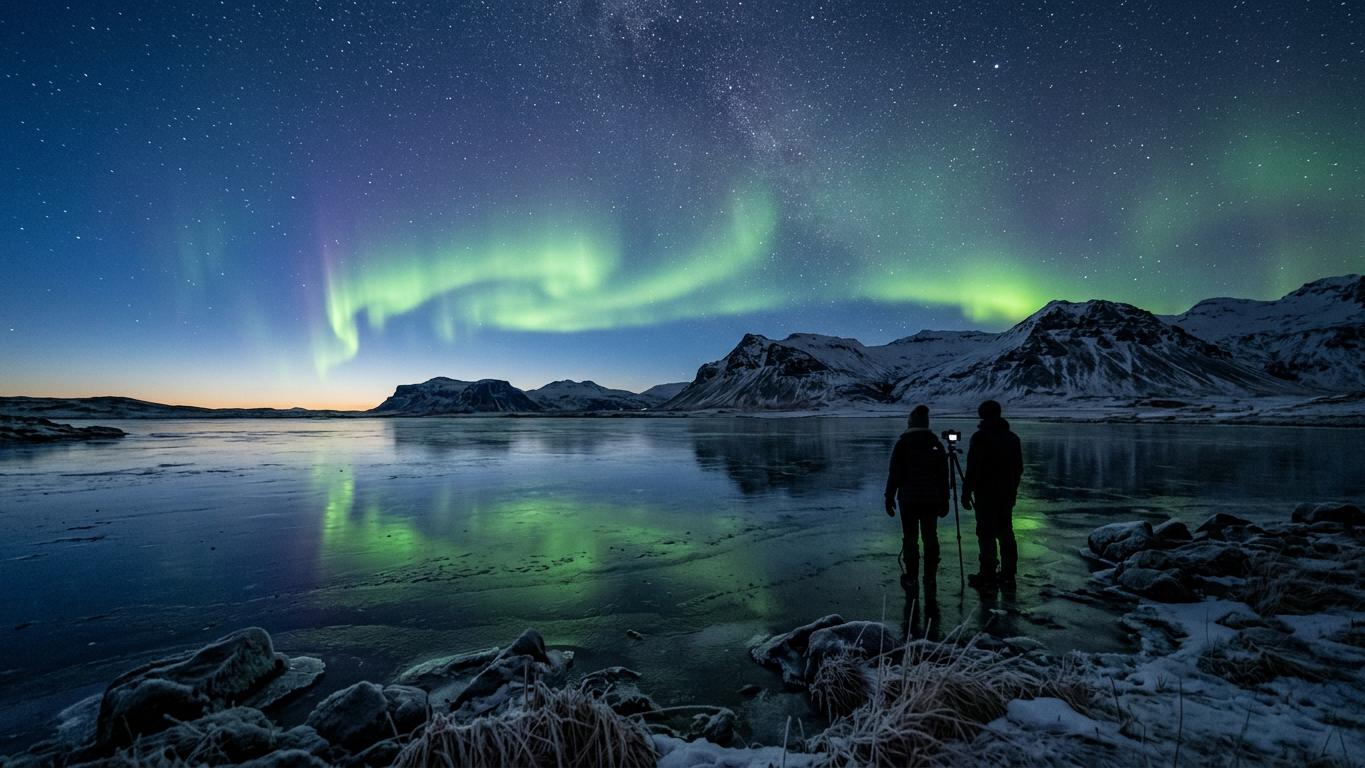
Winter photography tours cater specifically to camera settings and composition, with dedicated photography departures spending more time at each location and providing tripod use and technical guidance.
Planning Your Visit Around the Season
Book accommodation in Reykjavik for at least three nights to allow multiple aurora attempts. Cloud cover varies significantly from night to night, and a three-night stay gives you two to three viewing opportunities depending on tour availability and forecast conditions.
Monitor the KP forecast and cloud predictions starting three days before your first potential tour night. Most tours offer free cancellation until 24 hours before departure, and operators routinely cancel tours when forecasts show complete cloud cover. Flexibility in your schedule allows you to shift a tour from a cloudy night to a clearer one.
September through October and March through early April suit travellers who prefer milder temperatures and easier driving conditions, while November through February maximize darkness hours for those willing to accept winter weather. December and early January attract holiday visitors, while late January and February see fewer tourists despite excellent viewing conditions.
The aurora occurs independent of tourist season, so your primary considerations should be darkness hours, your tolerance for cold and winter driving conditions, and your ability to stay flexible as weather patterns develop during your visit.
Frequently asked questions
What is the absolute best month to see the northern lights in Iceland?
No single month guarantees the best aurora viewing, as success depends on the intersection of darkness hours, clear skies and geomagnetic activity. December through February offer the longest darkness periods at 16 to 20 hours per night, while September and March benefit from equinox-related geomagnetic activity. February often provides a good balance of long nights, improving weather compared to mid-winter, and fewer tourists than March.
Can you see the northern lights in Iceland in summer months like June or July?
The midnight sun prevents aurora viewing from mid-April through mid-August. Even when geomagnetic storms occur during these months, the sky never becomes dark enough for the aurora to become visible. The earliest possible sightings occur in late August, and the season ends in mid-April when extended twilight returns.
How many hours of darkness do you need to have a good chance of seeing the aurora in Iceland?
At least four to five hours of full darkness provide a realistic viewing window, which corresponds to late August through late April. Longer darkness periods from October through March increase your chances simply by extending the timeframe during which aurora activity can become visible. Most tours operate during the 22:00 to 02:00 window when activity statistically peaks.
Does the full moon really ruin your chances of seeing the northern lights in Iceland?
A full moon reduces visibility of faint auroras at low KP levels but does not prevent viewing during moderate to strong displays. Strong auroras at KP 3 and above remain easily visible even under a full moon. Many photographers actually prefer some moonlight to illuminate foreground landscapes, and restricting your trip to new-moon dates limits flexibility more than the moon itself limits viewing.
Is it better to visit Iceland for northern lights in early season or late season?
Early season from September through October offers milder temperatures, better road conditions and equinox activity in September, but shorter darkness hours limit your viewing window. Late season in March and April provides similar equinox benefits in March with longer darkness than September, though March still experiences winter weather. Mid-season from November through February maximizes darkness hours but brings the coldest temperatures and highest storm frequency.
What time of night should I go out to see the northern lights in Iceland?
The hours between 22:00 and 02:00 show the highest statistical probability of aurora activity due to Iceland's position relative to the magnetic midnight sector. Activity can begin as early as 20:00 or continue past 03:00 during strong storms, but most tours schedule departures for 20:00 to 21:30 to position you in dark-sky locations by 22:00.
How long should I stay in Iceland to have a good chance of seeing the northern lights?
A minimum of three nights gives you two to three viewing opportunities depending on forecast conditions and tour availability. Cloud cover represents the primary obstacle to viewing, and conditions vary significantly from night to night. Longer stays of five to seven nights substantially increase your probability of encountering at least one clear night with aurora activity.
Do northern lights tours from Reykjavik run every single night during the season?
Most operators schedule tours every night from September through April, but they cancel individual departures when forecasts predict complete cloud cover or severe weather. Tours typically offer free cancellation and rebooking for alternative nights. Booking flexibility allows you to shift your tour date based on developing forecasts rather than committing to a specific night days in advance.