Light Pollution and Aurora Visibility in the Capital
Reykjavik sits on Iceland's southwest coast with a population of around 130,000 in the greater metropolitan area, creating moderate light pollution that affects aurora viewing. The city center produces enough artificial light to wash out faint displays, particularly when the KP index sits below 3. Suburban neighborhoods and waterfront areas offer darker skies than downtown streets.
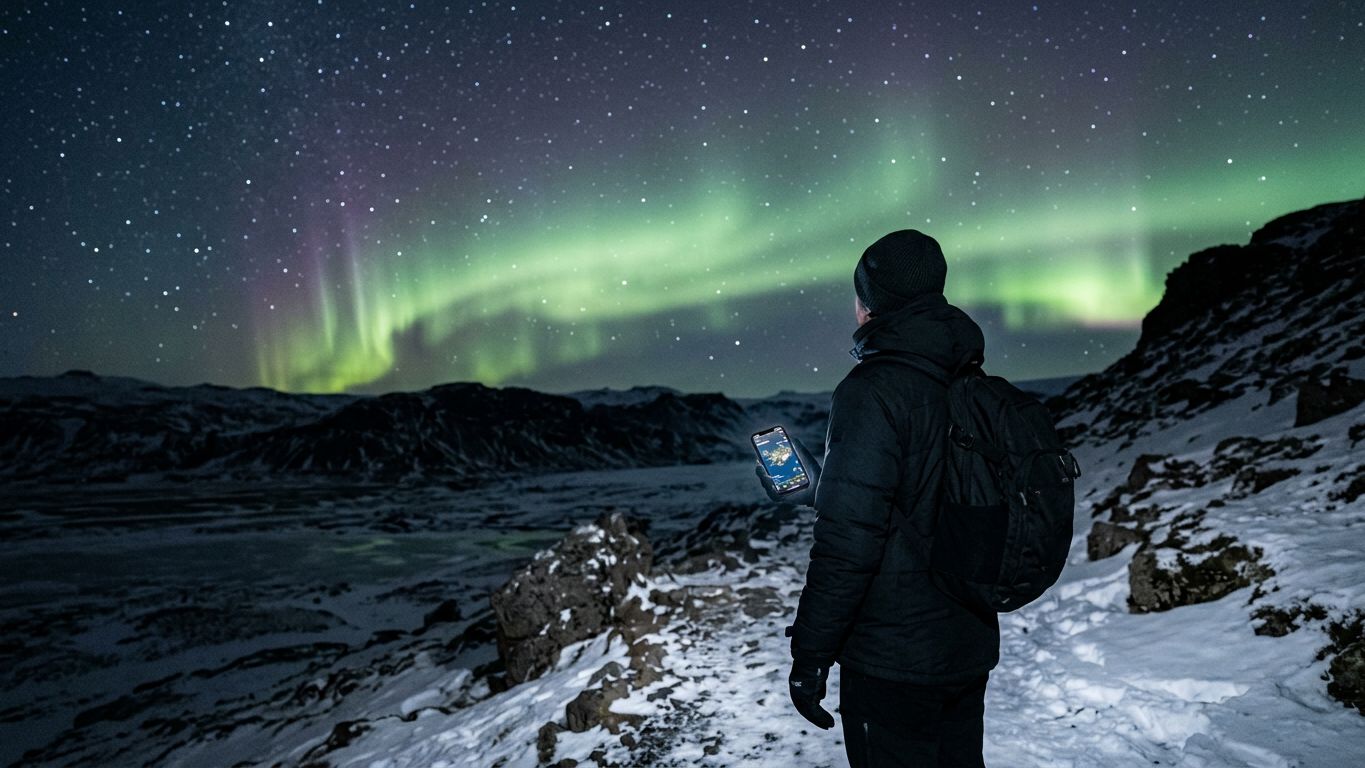
The Icelandic Met Office maintains a real-time aurora forecast that combines cloud cover predictions with geomagnetic activity levels, helping you decide whether staying in the city makes sense or whether heading out on a northern lights bus tour increases your chances substantially.
Weather patterns in Reykjavik tend to be cloudy and changeable throughout the aurora season, which runs from late August to mid-April. Cloud cover matters more than light pollution for most visitors, since even dark sky locations become useless when overcast conditions block the view.
Best Spots for Northern Lights in Reykjavik
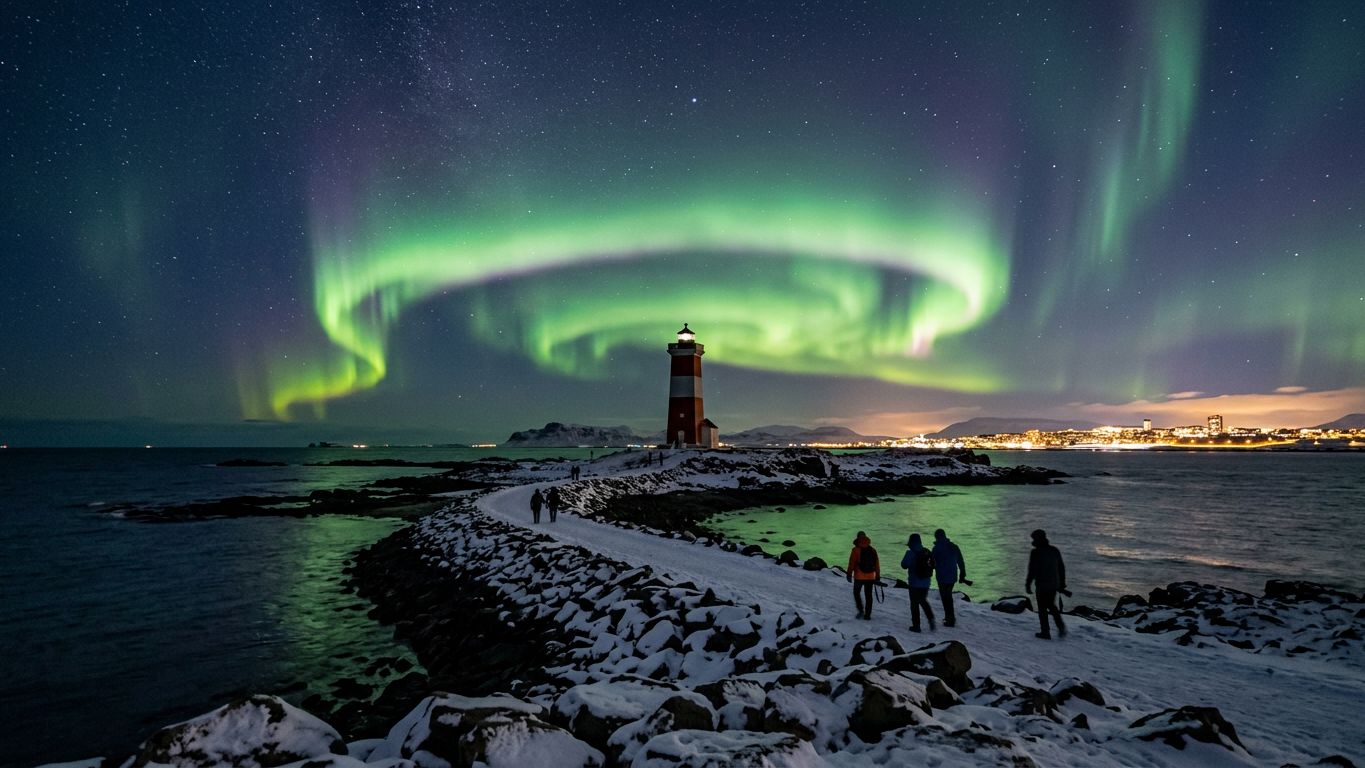
Grotta lighthouse stands at the western tip of the Seltjarnarnes peninsula, about 15 minutes by car from central Reykjavik. This location offers open views toward the north and west over Faxaflói Bay, with minimal light sources behind you when facing the water. The lighthouse area has a small parking area, a marked walking path and unobstructed horizons that make aurora spotting easier than most urban locations.
Perlan sits atop Oskjuhlid hill in the southern part of the city, approximately 130 meters above sea level. The observation deck provides panoramic views across Reykjavik and toward the mountains beyond, though the building's own lights can interfere. The surrounding woodland paths on Oskjuhlid offer darker spots away from the main structure.
Klambratun park lies northeast of the city center between residential neighborhoods. This green space has walking paths, open lawns and enough distance from major streets to reduce direct glare from streetlights. The northern edge of the park tends to be darker than areas closer to Miklabraut road.
The eastern shoreline along Aegissida and the area near the Hofdi House offer waterfront viewing with less foot traffic than downtown. These spots work best when aurora activity reaches moderate to strong levels, as weaker displays remain difficult to see against the city glow.
Northern Lights Tours from Reykjavik
More tours on GetYourGuideWhen to Stay in the City Versus Joining a Tour
Tours drive 30 to 90 minutes outside Reykjavik to reach areas with near-zero light pollution, significantly improving your chances of seeing faint auroras. Most operators monitor conditions through the evening and adjust departure times or destinations based on real-time forecast data. Tours also provide expert guidance on camera settings, explanations of the science behind the lights and transportation when roads become icy.
Staying in the city makes sense when the KP index reaches 4 or higher and skies are forecast to be clear, since strong displays remain visible even through moderate light pollution. You save time, avoid tour costs and can watch from multiple locations at your own pace. Having a rental car extends your options, letting you drive to Grotta or other suburban spots quickly when conditions improve.
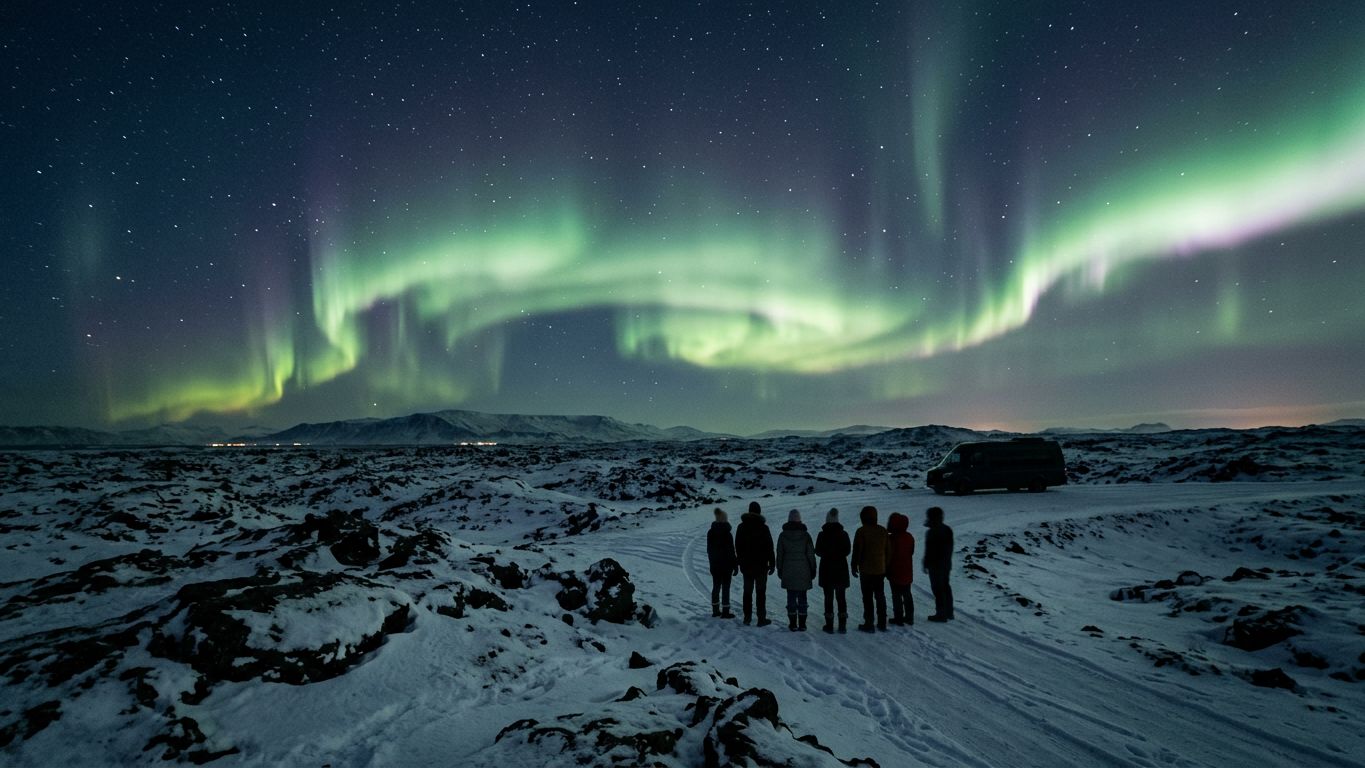
Tours become the better choice when forecasts show marginal conditions, cloud cover sits over Reykjavik but may be clearer elsewhere, or you lack transportation. Operators know alternative locations and can reposition during the evening, something impossible when watching from a fixed city spot. The best time to see northern lights in Iceland depends on both season and nightly conditions, making flexibility valuable.
What to Expect from Aurora Viewing in Urban Areas
City viewing typically reveals only moderate to strong auroras, with KP values of 3 or above producing visible displays. You may see green arcs along the northern horizon and vertical rays during active periods, but subtle movements and fainter colors often disappear against urban skyglow. Cameras with long exposures capture more color and detail than your eyes perceive in person.
Downtown Reykjavik near Laugavegur shopping street and the old harbor offers limited aurora viewing even during strong storms. Buildings block large portions of the sky, streetlights create constant glare and foot traffic with phone screens disrupts night vision. Walking 10 to 15 minutes toward waterfront parks or residential edges improves conditions noticeably.
Timing matters as much as location within the city. Aurora activity often peaks between 22:00 and 02:00, when fewer cars and pedestrians move through neighborhoods and some commercial lighting dims. Checking the aurora forecast every few hours during your stay helps you catch active periods.
Combining City Viewing with Dedicated Tours
Many visitors spend several nights in Iceland and split their aurora efforts between city watching and one or more tours. This approach lets you try quick viewing sessions from Reykjavik spots when forecasts look promising, while booking a small group northern lights tour or super jeep northern lights tour for a night when conditions are predicted to be excellent.
Tours that combine aurora viewing with other activities maximize your time during Iceland's short winter days. A golden circle and northern lights tour covers Thingvellir National Park, Geysir and Gullfoss during daylight before heading to dark sky locations after sunset. Similarly, a northern lights and hot springs tour pairs aurora hunting with a soak in geothermal pools.
Budget-conscious travelers often book a standard northern lights tour from Reykjavik for one evening and rely on self-guided city viewing for other nights. Premium options like private northern lights tours or northern lights photography tours suit visitors who want dedicated instruction and flexible itineraries tailored to specific interests.
Practical Tips for Aurora Hunting in Reykjavik
Dress in full winter layers even for city viewing, as standing still in Icelandic wind quickly becomes uncomfortable. Temperatures in Reykjavik during aurora season typically range from -5°C to +5°C, but wind chill drops perceived temperature significantly. Waterproof outer layers matter more than extreme cold-weather gear for coastal locations.
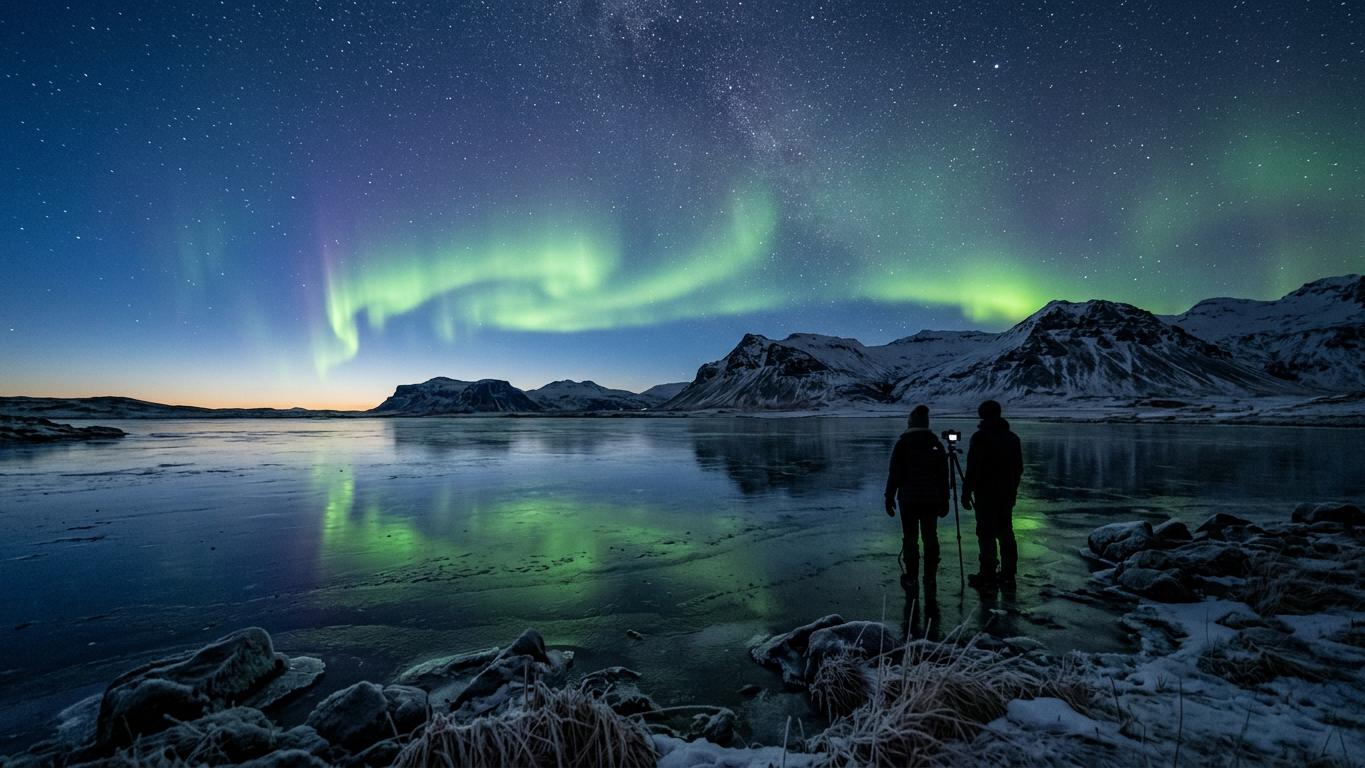
Bring a tripod and learn basic camera settings if you want photos, since phone cameras rarely capture auroras well without specialized apps and stable mounting. Manual mode with 5 to 15-second exposures, wide apertures and high ISO settings (1600-3200) produces better results than auto modes.
Check both the aurora forecast and cloud cover predictions before heading out, as clear skies matter more than high KP numbers for successful viewing. The Icelandic Met Office provides detailed cloud forecasts for Reykjavik and surrounding areas, updated every few hours. Patience becomes essential, as auroras strengthen and fade over hours rather than appearing as constant displays.
Frequently asked questions
Can you actually see the northern lights from Reykjavik city or do you have to go outside the city on a tour?
You can see the northern lights from Reykjavik when conditions are favorable, particularly when the KP index reaches 3 or higher and skies are clear. Light pollution from the city reduces visibility compared to rural areas, so strong displays become visible while faint auroras remain hard to detect. Tours drive to darker locations and improve your chances substantially, especially during marginal conditions.
What is the best place in Reykjavik to see the northern lights without going far from the city center?
Grotta lighthouse at the western tip of Seltjarnarnes peninsula offers the best combination of accessibility and darkness within Reykjavik, about 15 minutes from downtown. The waterfront location provides open northern horizons with minimal light behind you. Alternative spots include Oskjuhlid hill near Perlan and the eastern shoreline near Hofdi House, though all city locations work best during moderate to strong aurora activity.
How much does light pollution in Reykjavik affect your ability to see the aurora borealis compared to going on a tour?
Light pollution in Reykjavik reduces aurora visibility by washing out faint displays and subtle color variations that become clear in dark sky locations. Tours travel 30 to 90 minutes outside the city to areas with near-zero light pollution, revealing weaker auroras that remain invisible from urban spots. Strong displays with KP values of 4 or above remain visible from Reykjavik, while marginal conditions require darker locations for successful viewing.
Is it worth trying to see the northern lights from Reykjavik if I only have one or two nights in Iceland?
With only one or two nights, booking a dedicated tour increases your chances more than relying on city viewing, since operators monitor conditions and drive to locations with the best forecast. If the aurora forecast shows strong activity and clear skies over Reykjavik, you can attempt city viewing from Grotta or Perlan and save tour costs. Tours provide backup plans and flexibility that matter more when time is limited.
What time of night is best for seeing the northern lights in Reykjavik and how long should I plan to stay outside?
Aurora activity often peaks between 22:00 and 02:00, though displays can appear anytime after dark when conditions align. Plan to spend at least 30 to 60 minutes watching, as aurora intensity fluctuates over time rather than appearing as constant displays. Checking the aurora forecast before you head out helps you time your viewing session with predicted activity peaks.
During which months can you see the northern lights from Reykjavik and when is the best time of year?
The aurora season in Reykjavik runs from late August to mid-April when nights are dark enough for viewing. Peak months typically fall between September and March, with December and January offering the longest periods of darkness. Cloud cover patterns vary throughout the season, so checking conditions matters more than choosing a specific month.
If the northern lights forecast shows activity but there are clouds over Reykjavik should I book a last minute tour or wait in the city?
Tours become valuable when clouds cover Reykjavik but forecasts show clearer conditions in other regions, since operators adjust destinations during the evening based on real-time data. Waiting in the city only makes sense if cloud cover is predicted to clear over Reykjavik itself within a few hours. Most tour operators allow booking on short notice when availability permits, though popular dates may sell out.
Can you see the northern lights from downtown Reykjavik near the hotels and shopping streets or do you need to go to specific dark spots?
Downtown Reykjavik near Laugavegur and the old harbor has too much light pollution and building obstruction for good aurora viewing, even during strong displays. Walking 10 to 15 minutes toward waterfront areas like the eastern shoreline or driving to suburban spots like Grotta lighthouse improves conditions significantly. Dedicated dark locations matter less during very strong auroras with KP values above 5, but most displays require moving away from the brightest city center areas.