Why Thingvellir Works for Aurora Hunting
Thingvellir National Park sits in a protected valley between the North American and Eurasian tectonic plates, with minimal artificial light and wide open horizons. The park covers 93 square kilometers and has no permanent settlements, so light pollution is almost absent once you move away from the parking areas. The altitude sits at roughly 100 to 120 meters above sea level, and the flat valley floor gives unobstructed views of the northern sky.
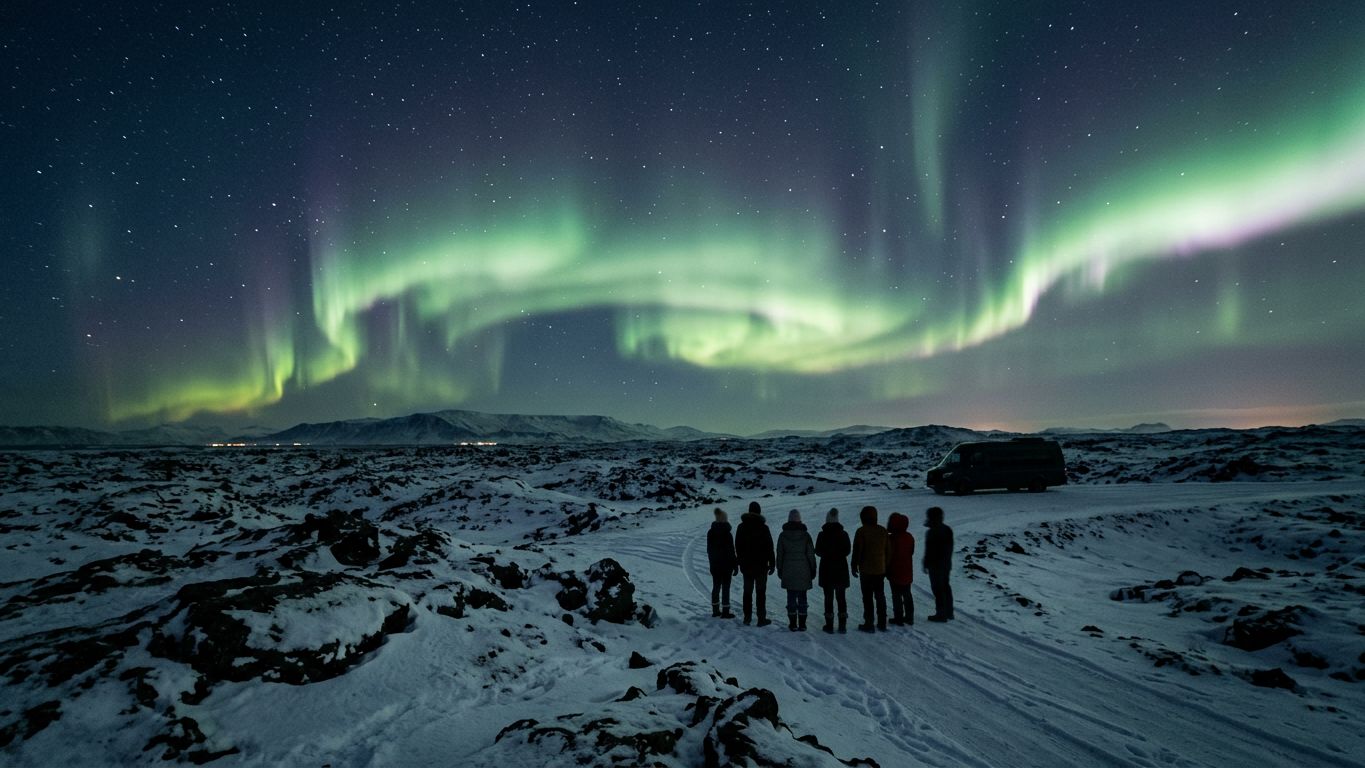
The combination of accessibility and darkness makes Thingvellir a popular stop on tours that combine the Golden Circle with northern lights viewing. Most operators visit the park after dark during winter months, when the aurora season runs from late August through mid-April. The distance from Reykjavik is manageable even in winter conditions, though the best months for aurora activity often bring snow and ice to the access roads.
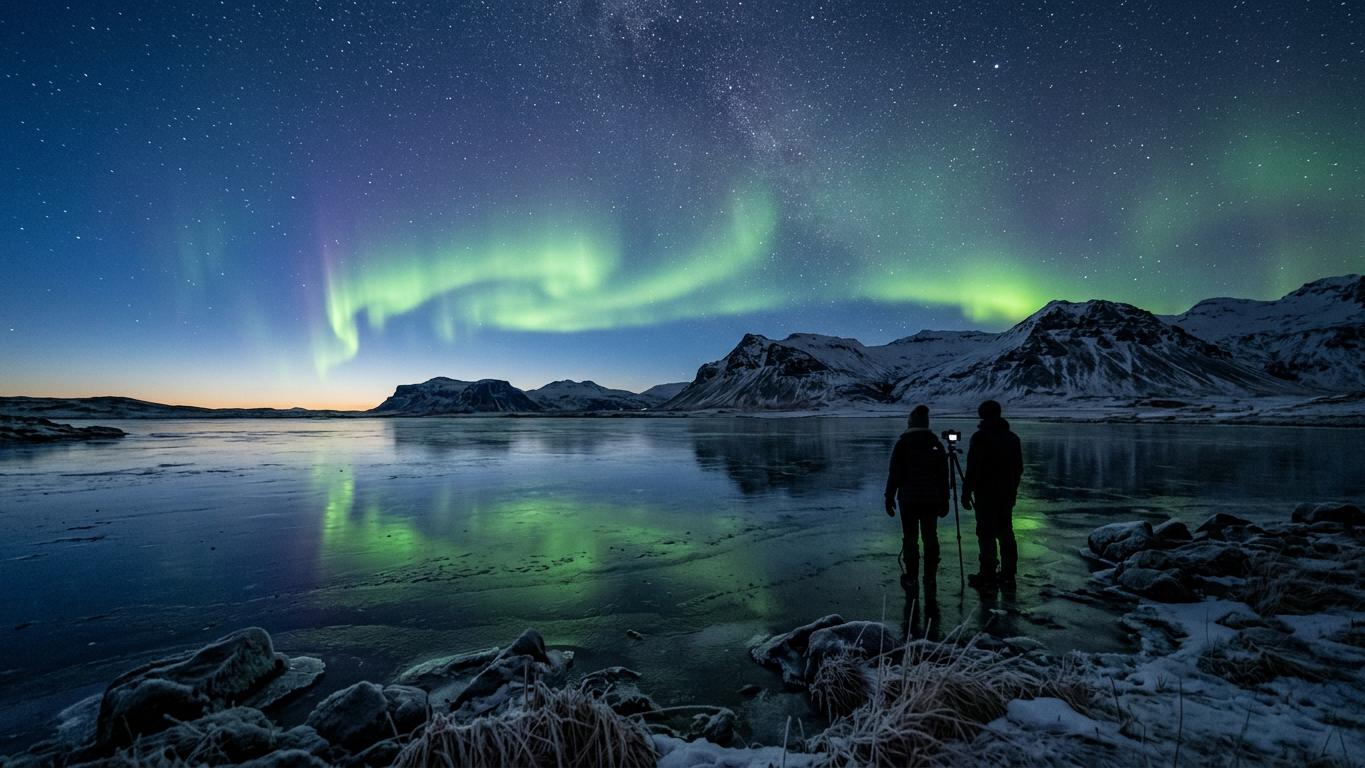
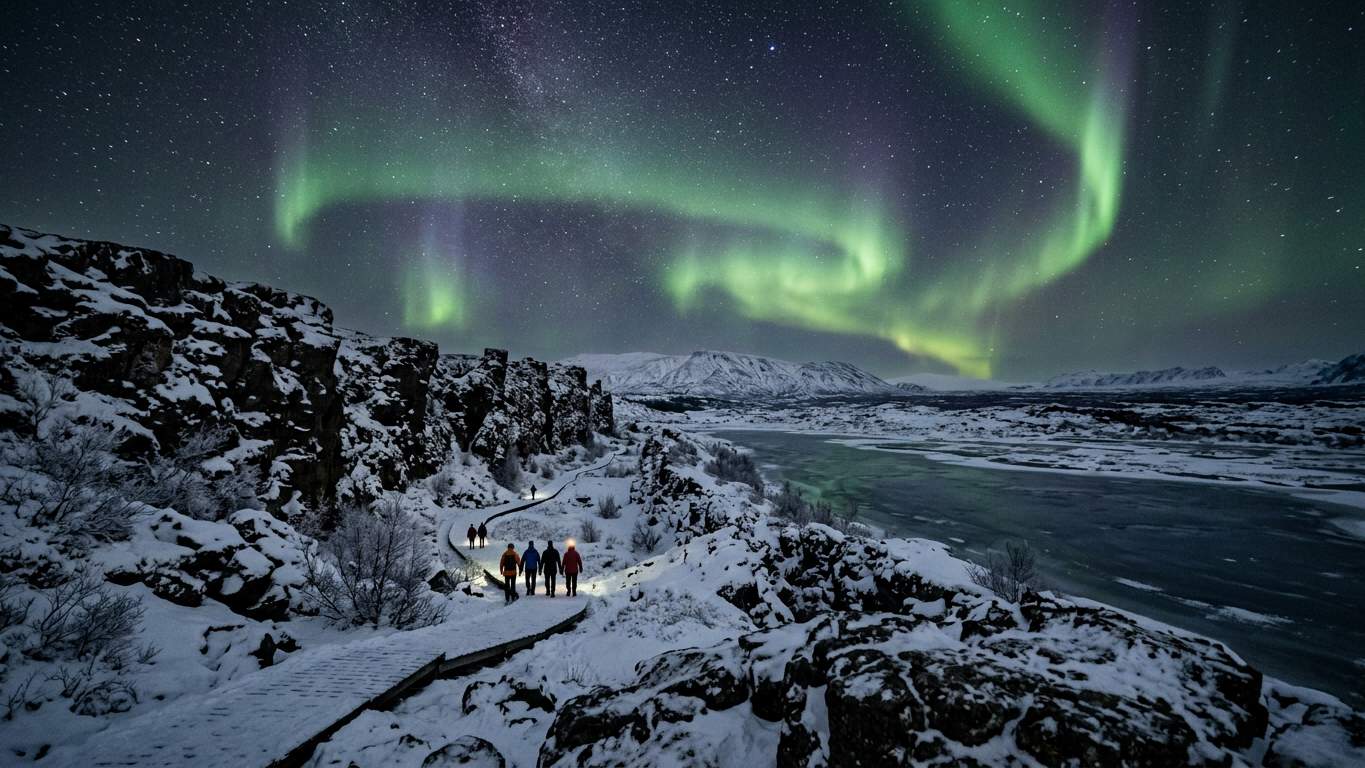
Thingvallavatn, Iceland's largest natural lake, sits at the eastern edge of the park and reflects the aurora when conditions are calm. The Almannagja rift walls rise up to 40 meters and create natural silhouettes against the night sky. These geological features give photographers distinctive compositions that differ from open-field locations.
Getting to Thingvellir for Thingvellir Northern Lights Viewing
Route 36 connects Reykjavik to Thingvellir via Mosfellsbaer, covering roughly 50 kilometers. The journey typically takes 45 to 50 minutes in good conditions. During winter, the road is maintained and plowed regularly, but black ice and sudden weather changes can extend travel time. Route 36 continues through the park and connects to the Golden Circle loop at Route 365.
The main visitor center parking area (Hakid) sits at the western end of the park and has ample space for coaches and private vehicles. A second parking area near Thingvallakirkja church provides access to the lake shore. Both areas have paved surfaces but can become slippery when snow-covered. Most northern lights bus tours from Reykjavik use the Hakid lot as a stopping point.
Public transport does not operate to Thingvellir after dark. Self-drivers need winter tires between November and April, and four-wheel drive is recommended when snow is forecast. Super jeep tours can access smaller roads within the park boundaries that are closed to standard vehicles in winter.
Book Northern Lights Tours from Reykjavik
More tours on GetYourGuideWeather and Forecast Considerations
Thingvellir sits inland and experiences different weather patterns than coastal Reykjavik. The valley can trap cloud and fog, but it also benefits from microclimate breaks when low-pressure systems move across the region. Checking the aurora forecast alongside cloud cover predictions is essential before heading out.
The Icelandic Met Office provides detailed cloud forecasts at vedur.is, with hourly updates showing cloud percentage and type. Thingvellir's location means it can have clear skies while Reykjavik is overcast, or vice versa. Wind speed in the valley is generally lower than in exposed coastal areas, which reduces the wind-chill factor during long stops.
Temperature at Thingvellir in winter typically ranges from minus 5 to plus 2 degrees Celsius, though cold snaps can push it lower. The park has no shelter or heated buildings open after hours, so layered clothing and windproof outer layers are necessary for extended viewing. Most tours allow 30 to 45 minutes at the location, depending on aurora activity.
Tour Options Including Thingvellir
Many northern lights tours from Reykjavik incorporate Thingvellir as a primary or backup location. Standard evening tours visit one to three sites depending on conditions, with guides monitoring cloud movement and KP index forecasts in real time. The park is often the first stop on eastbound routes, allowing operators to continue toward darker areas if cloud persists.
Golden Circle combination tours operate during daylight hours and return to the park after sunset for aurora viewing. These extended trips visit Geysir and Gullfoss before dark, then drive back to Thingvellir or nearby locations for night stops. Small group tours typically cap numbers at 15 to 20 participants, while budget coach tours can carry 40 or more.
Private tours offer flexible timing and can spend longer at Thingvellir if conditions are favorable. Photography-focused tours often choose the park for its foreground interest and relatively easy access to compositions. Some operators combine Thingvellir with the Kerid volcanic crater or the Secret Lagoon geothermal pool on northern lights and hot springs itineraries.
Photography at Thingvellir
The Almannagja gorge and the viewing platform at Hakid provide elevated vantage points for wide-angle aurora shots. A tripod is essential for exposures typically ranging from 5 to 20 seconds at ISO 1600 to 3200. The rift walls and distant lake create layered compositions, though foreground elements are dark and require careful framing.
Thingvallakirkja church, a small white structure near the lake, offers a lit building as a foreground element when the exterior lights are on. The church sits roughly 2 kilometers from the main parking area via a walking path that can be icy in winter. Most photography tours provide instruction on manual camera settings and composition techniques.
Light pollution from Reykjavik is visible as a faint orange glow on the western horizon but does not interfere with aurora visibility overhead or to the north. The Milky Way is clearly visible on moonless nights with clear skies. Red flashlights or headlamps set to red mode help preserve night vision and avoid disrupting other viewers' photography.
What Else to Know About Aurora Viewing at Thingvellir
The park is a UNESCO World Heritage Site with historical and geological significance beyond aurora viewing. The Althing, Iceland's parliament, convened here from 930 to 1798 AD, and interpretive signs mark key sites. During daylight visits, you can walk between the continental plates along marked trails, but these paths are less accessible and poorly lit after dark.
Mobile phone coverage is generally reliable in the main parking areas but can be patchy near the lake shore. Public toilets at Hakid are open year-round but are not heated. Most tours include a toilet stop either at the visitor center or at a fuel station in Mosfellsbaer on the return journey.
Thingvellir is one stop among many options for aurora hunting near the capital. If you want to compare different locations, viewing from within Reykjavik itself is possible on strong aurora nights, while the south coast offers coastal and glacier backdrops further from the city. For travelers planning visits during specific months, detailed seasonal information is available for December, January, and February, when darkness is longest.
Frequently asked questions
How far is Thingvellir National Park from Reykjavik and can I drive there myself to see the northern lights?
Thingvellir National Park is approximately 50 kilometers from Reykjavik, about 45 to 50 minutes by car on Route 36. You can self-drive, but winter tires are required between November and April, and four-wheel drive is recommended when snow or ice is forecast. The main parking areas are accessible and plowed regularly, though conditions can change quickly after dark.
Is Thingvellir a good location for seeing the northern lights compared to other places near Reykjavik?
Yes, Thingvellir offers very low light pollution and wide open skies within 45 minutes of the capital. The park's valley location can trap cloud, so it's important to check the Icelandic Met Office cloud forecast before visiting. On clear nights with aurora activity, the rift valley and lake provide excellent foregrounds for viewing and photography.
What time do northern lights tours usually visit Thingvellir National Park and how long do they stay?
Most tours depart Reykjavik between 20:00 and 21:00 and reach Thingvellir around 21:00 to 22:00, depending on pickup schedules. Stops typically last 30 to 45 minutes, allowing time for viewing and photography. Operators may move to alternative locations if cloud cover persists or if aurora activity is stronger elsewhere.
Can you see the northern lights at Thingvellir in December and January when it's very dark?
Yes, December and January offer the longest periods of darkness in Iceland, with night skies from roughly 16:00 to 10:00. Thingvellir is accessible throughout winter, though road conditions can be challenging and temperatures often drop below freezing. Cloud cover and snowfall are common, so clear skies are needed for aurora visibility regardless of darkness hours.
Are there facilities like toilets and shelter at Thingvellir when you visit at night for the northern lights?
Public toilets at the Hakid visitor center parking area remain open year-round but are not heated. There are no indoor shelters or heated buildings accessible after the visitor center closes. Most tours provide warm drinks and blankets, but you should dress in layers and bring windproof clothing for extended outdoor viewing.
Is it better to book a tour to Thingvellir for northern lights or drive there independently?
Tours offer the advantage of experienced guides who monitor weather and aurora forecasts in real time and can relocate to clearer areas if Thingvellir is cloudy. Self-driving gives you flexibility and avoids group schedules, but requires confidence navigating winter roads at night and interpreting forecast data yourself. Both approaches work well depending on your comfort level and budget.
What should I bring for photographing the northern lights at Thingvellir National Park?
Bring a sturdy tripod, a camera capable of manual settings with a wide aperture lens, and spare batteries that drain quickly in cold conditions. A red headlamp helps preserve night vision, and microfiber cloths prevent lens fogging. Layered clothing including gloves that allow you to operate camera controls is essential for the 30 to 45 minute stops typical of tours.
Can you combine a Golden Circle day tour with northern lights viewing at Thingvellir on the same trip?
Yes, combination tours visit Golden Circle sites like Geysir and Gullfoss during daylight hours, then return to Thingvellir or nearby locations after dark for aurora viewing. These extended trips typically last 10 to 12 hours and operate from late August through mid-April when nights are dark enough for northern lights visibility.