Why Kirkjufell Works for Aurora Photography
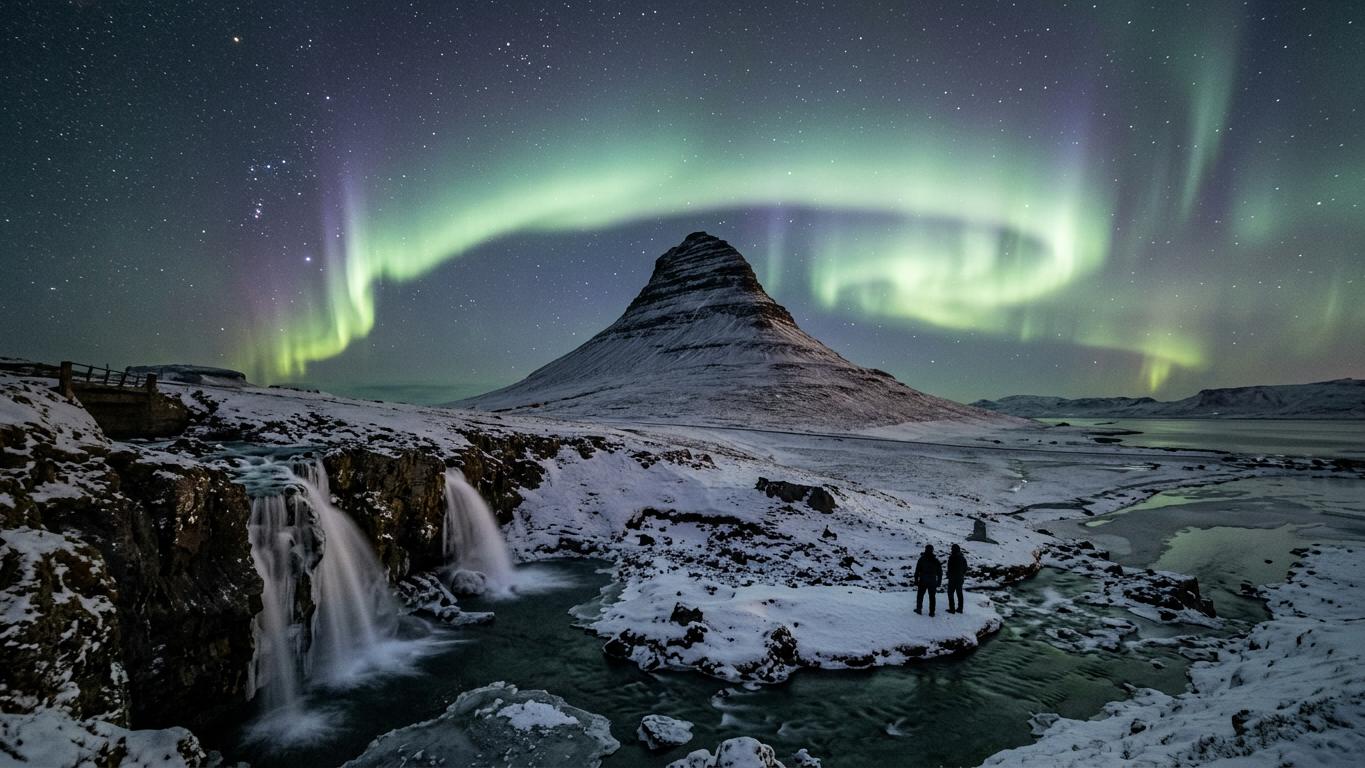
Kirkjufell stands 463 metres high on the northern coast of the Snaefellsnes peninsula near the town of Grundarfjörður. The mountain sits roughly 170 kilometres northwest of Reykjavik and offers a distinctive cone-shaped profile that reflects in nearby Kirkjufellsfoss waterfall. This combination creates a foreground for northern lights photography that appears frequently in travel media and social feeds.
The location faces north across Breiðafjörður bay, giving clear views toward the auroral oval's typical position. Light pollution from Grundarfjörður remains minimal because the town holds fewer than 900 residents. Cloud cover can move in quickly from the Atlantic, so checking the Icelandic Met Office aurora forecast before departure helps gauge conditions. The site sits at sea level with flat parking areas, making access easier than many highland locations during winter.
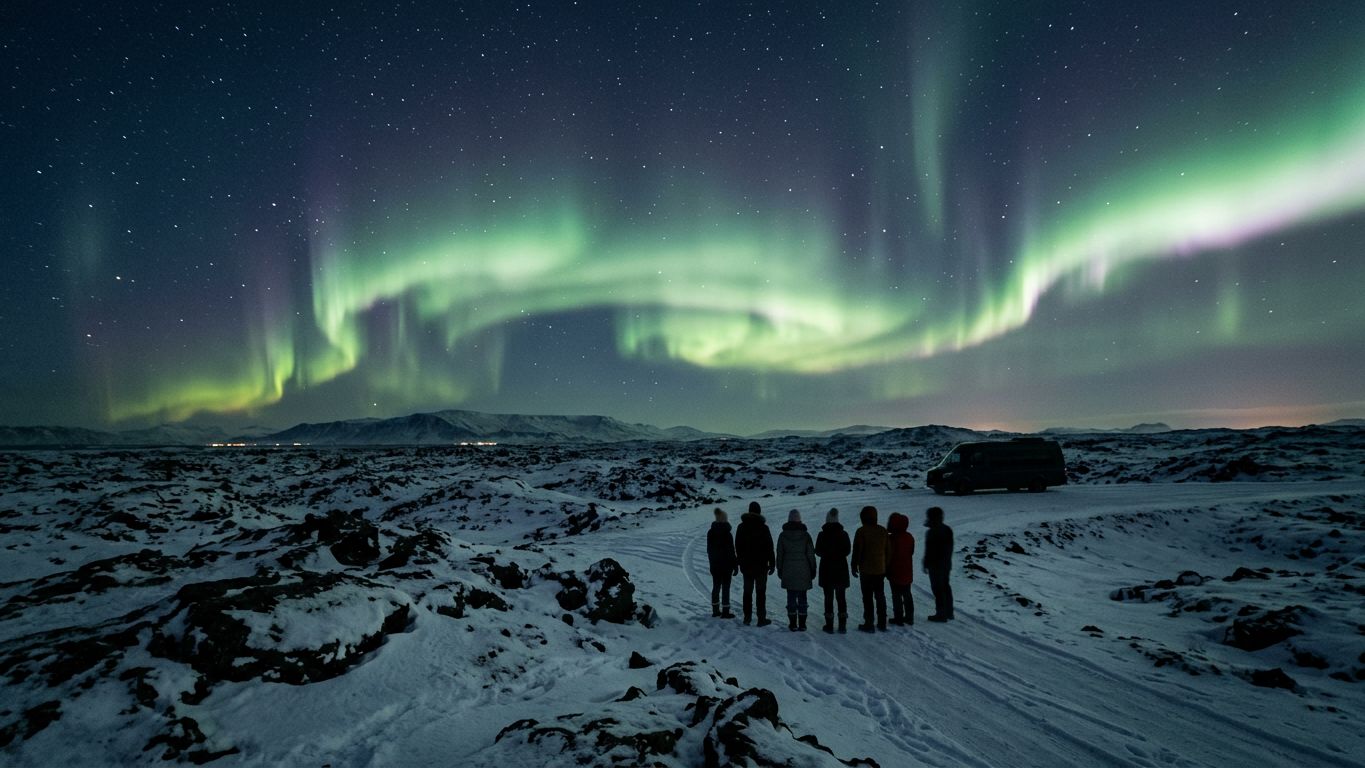
Most northern lights photography tours in Iceland that visit Snaefellsnes dedicate significant time to Kirkjufell because the foreground elements require specific angles and compositions. Tour operators typically scout the waterfall viewpoint and the roadside pullouts to find the best perspective for the night's aurora activity.
Day Tours to Kirkjufell for Northern Lights
Standard day tours depart Reykjavik in the afternoon and drive north through Hvalfjörður tunnel, then west along the Snaefellsnes coast. Driving time reaches approximately 2.5 hours to Kirkjufell under normal winter road conditions. Route 54 circles the peninsula and passes lava fields, fishing villages, and coastal cliffs before arriving at Grundarfjörður.
Tours usually include stops at other Snaefellsnes landmarks during the remaining daylight hours. Búðir church, Arnarstapi sea arches, and Djúpalónssandur black pebble beach appear on many itineraries. These stops add context to the peninsula's geology and history before the group settles at Kirkjufell after dark. Total tour duration typically runs 11 to 13 hours, returning to Reykjavik between midnight and 02:00.
Budget tours use standard coaches with 40 to 50 passengers, while mid-range options often limit groups to 19 seats. Premium departures may provide smaller vehicles, professional photography guidance, and hot drinks at the aurora viewing site. All categories depend on solar activity, cloud cover, and the KP index forecasted for that night. The KP scale runs from 0 to 9, with KP 2 or higher generally needed for displays visible at Kirkjufell's latitude of 64.9°N.
Book Kirkjufell Northern Lights Tours
More tours on GetYourGuideOvernight Tours and Extended Itineraries
Overnight tours spend one or two nights on the Snaefellsnes peninsula, removing the pressure to return to Reykjavik the same evening. Accommodation usually sits in Grundarfjörður, Ólafsvík, or Stykkishólmur, placing you within 10 to 30 minutes of Kirkjufell. Staying locally allows multiple attempts if clouds obscure the aurora on the first night, and you can revisit the mountain at different tide levels or foreground compositions.
Two-day itineraries often combine Snaefellsnes with the Westfjords or the Snæfellsjökull glacier area. Three-day versions may circle the entire peninsula at a relaxed pace, visiting Rauðfeldsgjá gorge, Lóndrangar basalt pillars, and the Saxhóll crater. Evening hours remain free for independent aurora watching near your accommodation or at designated viewpoints.
Multi-day tours provide an alternative to single-night northern lights bus tours from Reykjavik by spreading the travel time across several days. You also gain daylight hours to explore the peninsula's cultural sites, including the Maritime Museum in Stykkishólmur and the Bjarnarhöfn Shark Museum near Bjarnarhafnarfjall mountain.
Weather and Seasonal Considerations
Aurora season in Iceland runs from late August through mid-April, with peak activity often recorded between September and March. Kirkjufell's coastal position brings milder winter temperatures than inland sites, but Atlantic weather systems can deliver rapid cloud buildups and strong winds. Snow and ice commonly coat the footpaths around Kirkjufellsfoss from November through March, requiring sturdy boots and caution on slopes.
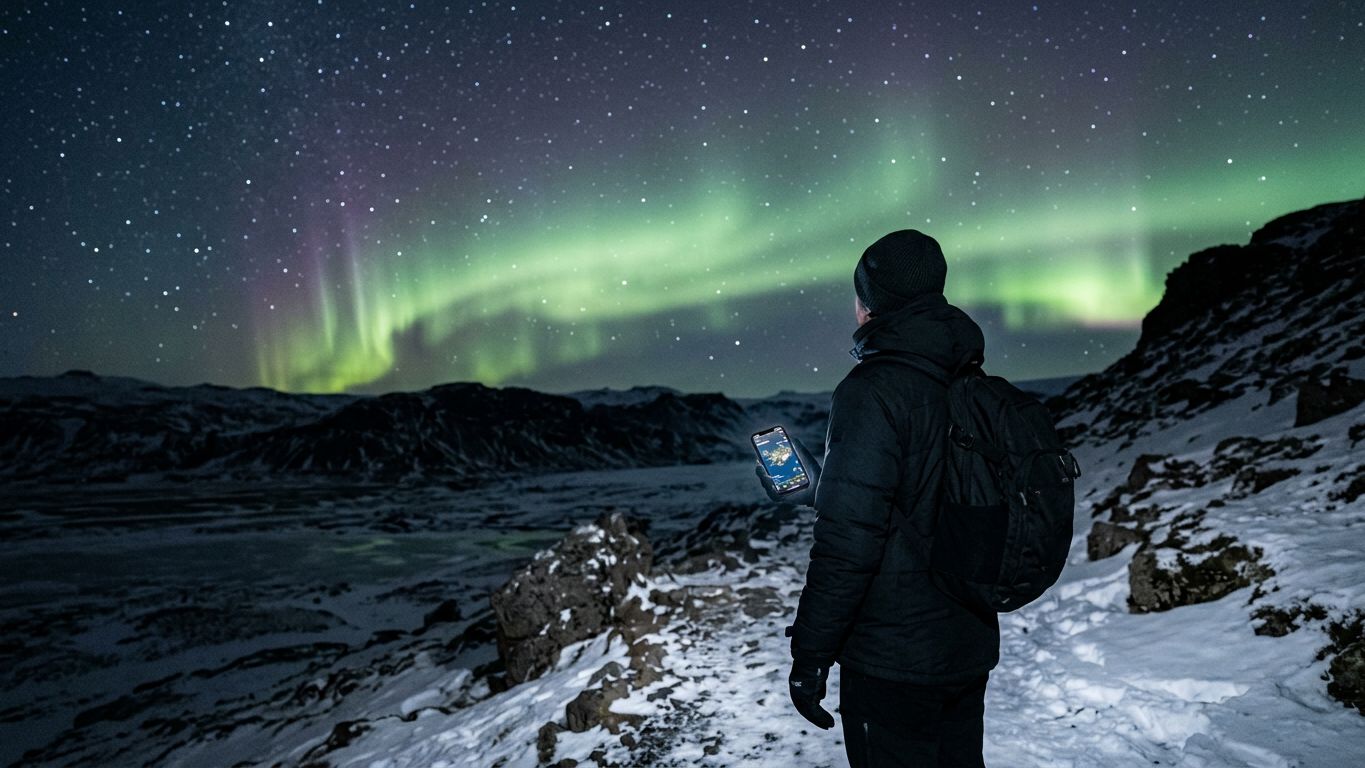
The northern lights forecast for Iceland combines solar wind data with local cloud predictions to estimate viewing chances. Clear skies appear more frequently during high-pressure systems, which also bring colder temperatures. January and February offer the longest nights, giving extended windows for aurora displays, though December holds the darkest skies overall. September and October balance reasonable darkness with better road conditions and milder weather before winter fully sets in.
Wind gusts can exceed 20 metres per second along the exposed Snaefellsnes coast, making tripod use challenging and wind chill a factor. Layered clothing, waterproof outer shells, and insulated gloves become essential for spending one to two hours outdoors at the mountain. Most tour operators provide windbreak spots near vehicles or natural rock formations, but you will still spend significant time in open air to capture the aurora.
Photography Tips for Kirkjufell and the Aurora
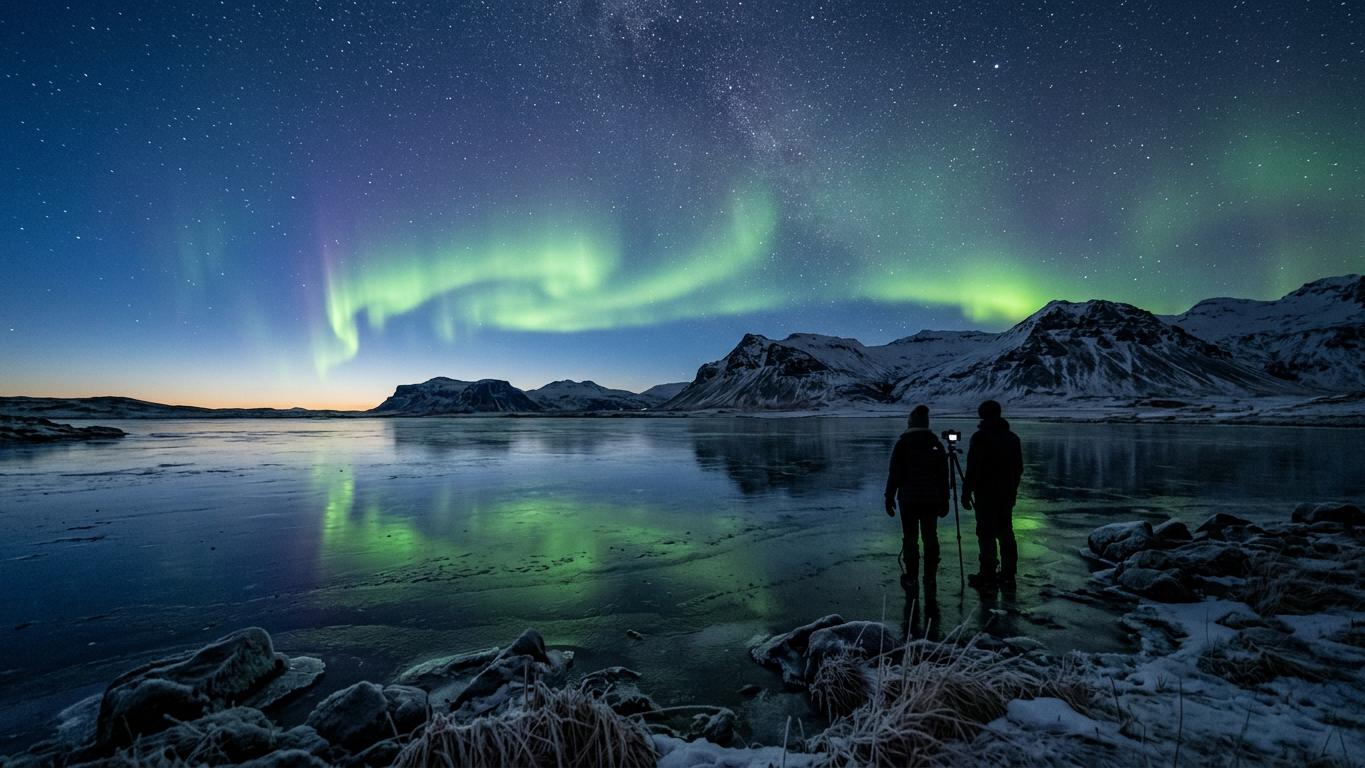
Kirkjufell compositions typically place the mountain in the right third of the frame with Kirkjufellsfoss in the foreground. A wide-angle lens between 14mm and 24mm on a full-frame camera captures both elements and the sky overhead. Manual focus set to infinity ensures sharp stars and aurora curtains, while ISO settings between 1600 and 3200 balance light sensitivity with acceptable noise levels. Shutter speeds range from 4 to 15 seconds depending on aurora intensity and movement.
Tripods must sit on uneven rocks and grass around the waterfall, so adjustable legs and a stable head help maintain composition. Spare batteries lose charge quickly in sub-zero temperatures, so keeping them in inside pockets extends shooting time. A headlamp with a red filter allows you to adjust camera settings without destroying your night vision or ruining others' exposures with white light.
Several photography-focused aurora tours include instruction on exposure settings, composition techniques, and post-processing basics. Guides often carry backup equipment and knowledge of alternative angles if the classic waterfall viewpoint becomes crowded. Arriving early in the evening secures the best tripod positions before other tour groups or independent photographers claim the prime spots.
Combining Kirkjufell with Other Destinations
Snaefellsnes lies on the opposite side of Iceland from popular southern sites like Jökulsárlón glacier lagoon and the black sand beaches near Vík. South coast aurora tours visit Seljalandsfoss and Skógafoss waterfalls, while Kirkjufell tours explore western fjords and volcanic landscapes. Combining both regions in a single trip requires either a multi-day tour around the ring road or separate day trips from Reykjavik.
Thingvellir National Park sits about 90 minutes from Kirkjufell if you route through Borgarfjörður valley, making same-day combinations possible but rushed. The Golden Circle and Snaefellsnes appear together on some two-day itineraries that overnight near Borgarnes, splitting the driving across separate days. Private tours offer the flexibility to adjust routes and stops based on real-time weather and aurora forecasts, though they carry higher per-person costs than shared coach departures.
If you plan to stay in Reykjavik throughout your visit, viewing the aurora from the capital on less active nights can supplement dedicated tours to darker locations. Kirkjufell represents a full-day commitment from Reykjavik, so booking for a night when forecasts predict KP 3 or higher maximizes the chances of visible displays over the mountain.
Booking and Practical Details
Tour operators list Kirkjufell departures as either dedicated photography expeditions or general Snaefellsnes aurora tours. Schedules vary by season, with more frequent departures between October and March when darkness arrives earlier. Pickup from Reykjavik hotels or designated bus stops typically begins 13:00 to 15:00 for day tours, or 09:00 to 10:00 for overnight itineraries.
Cancellation policies differ by operator, but most allow free cancellation 24 hours before departure. Weather-related cancellations initiated by the operator usually offer rebooking or full refunds, though you remain responsible for non-refundable accommodation if you booked independently. Small group tours capped at 10 to 15 passengers tend to adjust plans more dynamically than large coaches, sometimes switching destinations en route if cloud forecasts improve elsewhere.
Bringing your own camera equipment gives full creative control, but several tour types provide cameras and tripods for participants without gear. Small group options often include more personalized instruction and longer stops at each location. Super jeep tours can access rougher tracks around the peninsula, though the main Kirkjufell viewpoint sits directly beside paved Route 54 and requires no off-road capability.
Frequently asked questions
How long does it take to drive from Reykjavik to Kirkjufell mountain for northern lights viewing?
The drive from Reykjavik to Kirkjufell takes approximately 2.5 hours under normal winter road conditions, covering around 170 kilometres via Route 1 north and Route 54 west. Tours typically depart in the afternoon to arrive after dark during aurora season. Return journeys reach Reykjavik between midnight and 02:00, making total tour time 11 to 13 hours for day trips.
Is Kirkjufell better than other locations in Iceland for photographing the northern lights?
Kirkjufell offers a distinctive foreground with the mountain and Kirkjufellsfoss waterfall, making compositions instantly recognizable and popular on social media. The site has minimal light pollution and faces north across open water. However, coastal weather can bring rapid cloud cover, while inland sites like Thingvellir or the south coast may have clearer skies on specific nights, so no single location guarantees better conditions.
What is the best time of year to see the aurora over Kirkjufell mountain on the Snaefellsnes peninsula?
Aurora season at Kirkjufell runs from late August through mid-April, with January and February offering the longest nights and extended viewing windows. September and October balance reasonable darkness with milder weather and better road access before deep winter. December provides the darkest overall skies, though all months depend on solar activity and cloud forecasts published by the Icelandic Met Office.
Can I visit Kirkjufell for northern lights on my own without joining a tour from Reykjavik?
Self-drive to Kirkjufell is possible if you rent a vehicle and feel confident navigating Icelandic winter roads in darkness. The main viewpoint sits directly beside Route 54 with parking areas, so no hiking or special access is required. However, tours provide aurora forecasting, backup plans if clouds appear, and photography guidance that independent visitors must research and manage themselves.
Do overnight tours on Snaefellsnes give better chances of seeing the northern lights at Kirkjufell than day trips?
Overnight tours allow two or more evenings on the peninsula, increasing the probability that at least one night will have clear skies and sufficient aurora activity. Staying in Grundarfjörður or nearby towns places you within 10 to 30 minutes of Kirkjufell, enabling quick returns if clouds clear unexpectedly. Day tours from Reykjavik offer only one attempt and face long return drives regardless of conditions.
What camera settings should I use to photograph the northern lights over Kirkjufell and Kirkjufellsfoss waterfall?
Use a wide-angle lens between 14mm and 24mm, manual focus set to infinity, ISO 1600 to 3200, and shutter speeds from 4 to 15 seconds depending on aurora brightness. A sturdy tripod is essential on the uneven ground around the waterfall. Keep spare batteries warm in inside pockets, and use a red headlamp to preserve night vision while adjusting settings.
How crowded does Kirkjufell get with northern lights tour groups during peak season?
Multiple tour operators visit Kirkjufell on clear winter nights, so the main waterfall viewpoint can host several groups simultaneously between 20:00 and 23:00. Arriving earlier in the evening or exploring alternative angles along the roadside reduces crowding. Photography tours often scout secondary positions or time visits to avoid overlapping with large coach groups.
What other attractions on the Snaefellsnes peninsula do northern lights tours visit besides Kirkjufell?
Tours commonly stop at Arnarstapi sea arches, Djúpalónssandur black pebble beach, Búðir church, and the Snæfellsjökull glacier area during daylight hours. Overnight itineraries may include Rauðfeldsgjá gorge, Lóndrangar basalt pillars, Saxhóll crater, and the towns of Stykkishólmur or Ólafsvík. These stops provide geological and cultural context before the evening aurora watch at Kirkjufell.