How Northern Lights Bus Tours Work
Most operators offer pickup from designated stops across Reykjavik and the capital region, with the collection window usually starting around 8pm or 9pm during winter months. The pickup process can take 30 to 45 minutes as the coach visits multiple locations before heading out of the city.
Tours typically last four to five hours in total, including driving time. The driver and guide monitor the aurora forecast throughout the evening and choose destinations based on cloud cover and geomagnetic activity. Common destinations include areas around Thingvellir National Park, the Reykjanes Peninsula, and countryside sites along the south coast.
Most tour operators provide free rescheduling or a second attempt if the aurora does not appear, though policies vary by company. You usually need to contact the operator within a day or two of your original tour to arrange the retry.
What to Expect on a Coach Tour
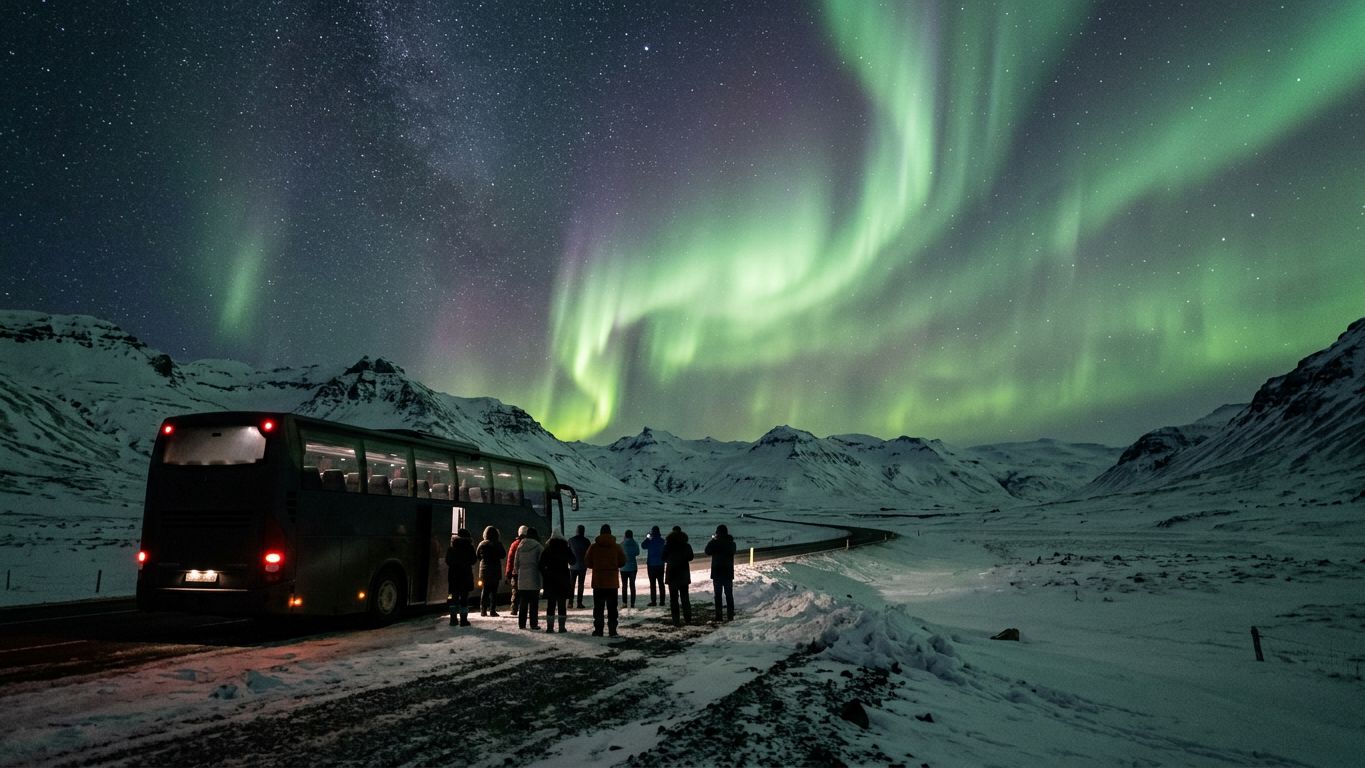
Coaches offer comfortable seating with heating, which matters during long winter evenings. The vehicles are standard tourist buses designed for paved roads, so operators stick to Route 1 and main highways rather than venturing onto gravel tracks or highland routes.
Group sizes range from 30 to 50 people, sometimes filling the entire coach during peak season. The guide provides commentary about Icelandic nature, aurora science, and photography tips during the journey. At viewing stops, you typically have 20 to 40 minutes to watch the sky, take photos, and use any facilities if available.
The large group size means less flexibility than small group northern lights tours. If one passenger is late to the bus after a stop, the entire group waits. Similarly, the driver cannot easily change plans based on individual requests or make spontaneous detours.
Compare Northern Lights Bus Tours
More tours on GetYourGuidePrice Range and What's Included
Northern lights bus tours from Reykjavik sit in the budget category of aurora tour options. The per-person rate is typically lower than minibus or jeep alternatives because costs are distributed across more passengers.
Standard inclusions are pickup and drop-off at designated stops, an English-speaking guide, and the free retry policy if the aurora does not appear. Some operators provide hot chocolate or light refreshments during the tour. Photography assistance is available but less personalized than on dedicated photography tours due to the high passenger-to-guide ratio.
Extra costs you might encounter include premium pickup from hotels in certain areas, optional photo packages where professional photographers capture images of your group, and any food or drinks beyond what the operator provides.
Advantages of Bus Tours
The main advantage is affordability. If you're traveling on a tight budget or prioritizing other expensive activities during your Iceland trip, a coach tour delivers aurora access without premium pricing. The cost difference compared to super jeep northern lights tours can be significant.
Coaches also provide social atmosphere. Many travelers enjoy meeting people from different countries and sharing the experience with a lively group. The buses are spacious enough to move around, and the heating system works well even in very cold conditions.
These tours require no driving on your part. After a long day exploring Reykjavik or doing day tours, you can simply board the bus and let the driver handle navigation, parking, and route decisions based on current weather conditions.
Drawbacks and Limitations
The large group size creates some practical challenges. At popular viewing spots, 40 or 50 people moving around can create light pollution from phones and camera screens. Maintaining silence and darkness becomes difficult with so many participants.
Flexibility is limited. The driver must choose locations accessible by standard coach, which rules out certain remote areas or rough roads that super jeep tours can reach. If the aurora appears faintly in one direction but strongly elsewhere, the coach cannot quickly relocate as easily as a smaller vehicle.
Pickup and drop-off take considerable time. If you're staying in central Reykjavik, you might be collected early in the route but wait while the bus visits other stops. On return, you could be among the last to be dropped off, extending your evening by another 30 to 45 minutes.
Personal attention from guides is limited. With 40 passengers, the guide cannot provide individual photography help, answer everyone's questions in depth, or cater to specific interests. You share the guide's time and expertise with many others.
Who Should Choose a Bus Tour
Coach tours suit budget-conscious travelers who prioritize affordability over comfort or exclusivity. If you're backpacking, on a student budget, or simply want to allocate funds to other aspects of your trip, the bus option makes sense.
These tours also work well for solo travelers who enjoy group settings. The social aspect can be appealing if you're traveling alone and want to meet others. The structured nature of a large group tour feels safer and less isolated than some alternatives.
Families with older children or teenagers might find coach tours practical, especially if several family members need seats. The per-person economics work better for larger groups compared to booking a private northern lights tour.
However, if you want flexibility, personalized service, or access to remote locations, consider alternatives. Photography enthusiasts usually prefer smaller groups or specialized tours. Travelers with mobility issues might find the coach steps and crowded viewing areas challenging.
Booking Tips and Timing
Book your northern lights bus tour for early in your Iceland stay if possible. This strategy gives you buffer days to use the free retry policy if weather doesn't cooperate. The aurora season runs from late August through mid-April, with peak viewing in December, January, and February when nights are longest.
Check northern lights forecast resources before your trip to understand general conditions, but remember that operators make final go-no-go decisions on the day of your tour. Tours run even in marginal conditions because forecasts can change rapidly.
Confirm your exact pickup location and time with the operator a day before departure. Some hotels are not on standard pickup routes, and you may need to walk to a nearby designated stop. Dress warmly in layers, as you'll spend time standing outside in winter temperatures.
Alternatives to Consider
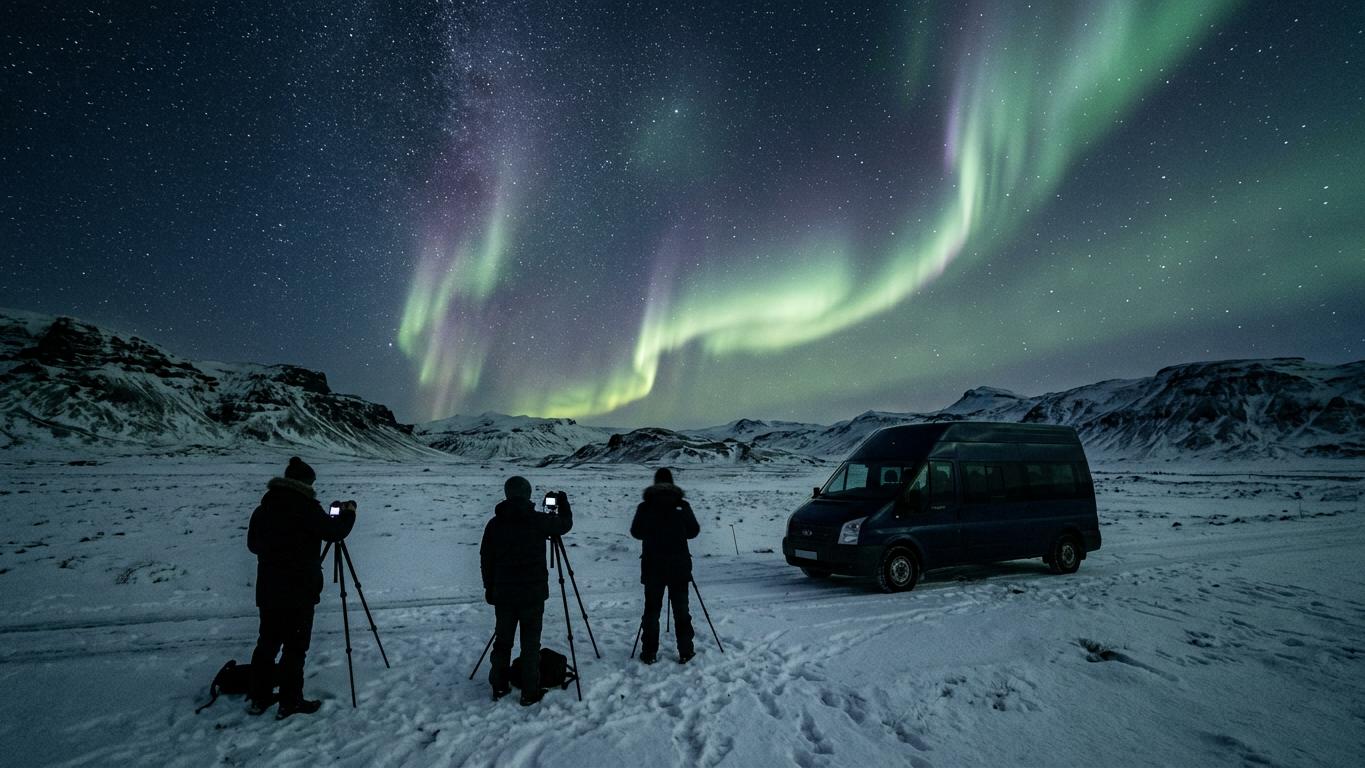
If the large group size concerns you but budget remains important, look at small group alternatives that cap participants at 15 to 19 people. These minibus tours cost more than coaches but offer better flexibility and personal attention.
Travelers visiting Iceland in autumn might consider combining aurora hunting with daytime sightseeing on a golden circle and northern lights tour. These full-day excursions maximize your time by visiting major landmarks before heading out for evening aurora watching.
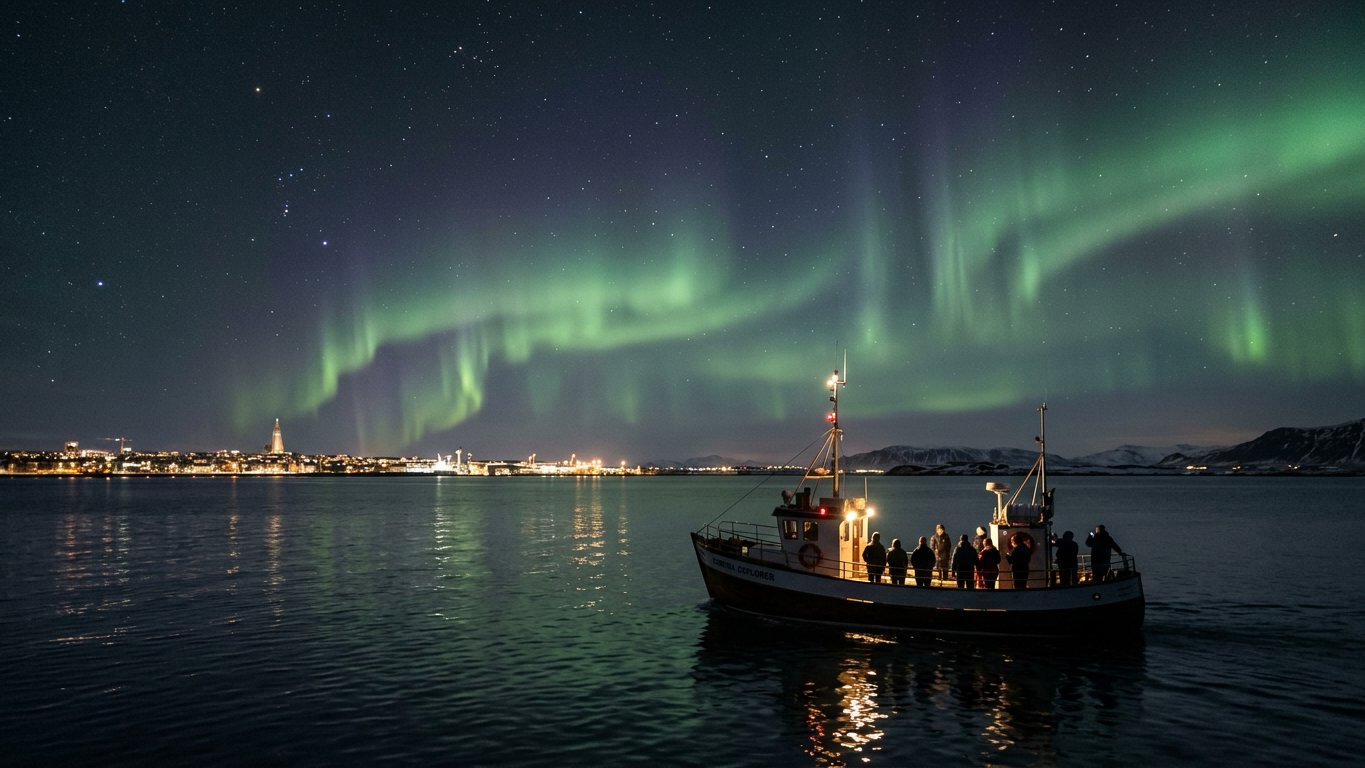
For a completely different perspective, boat tours from Reykjavik provide ocean-based viewing away from all land-based light pollution. The experience differs significantly from land tours but represents another budget-friendly option.
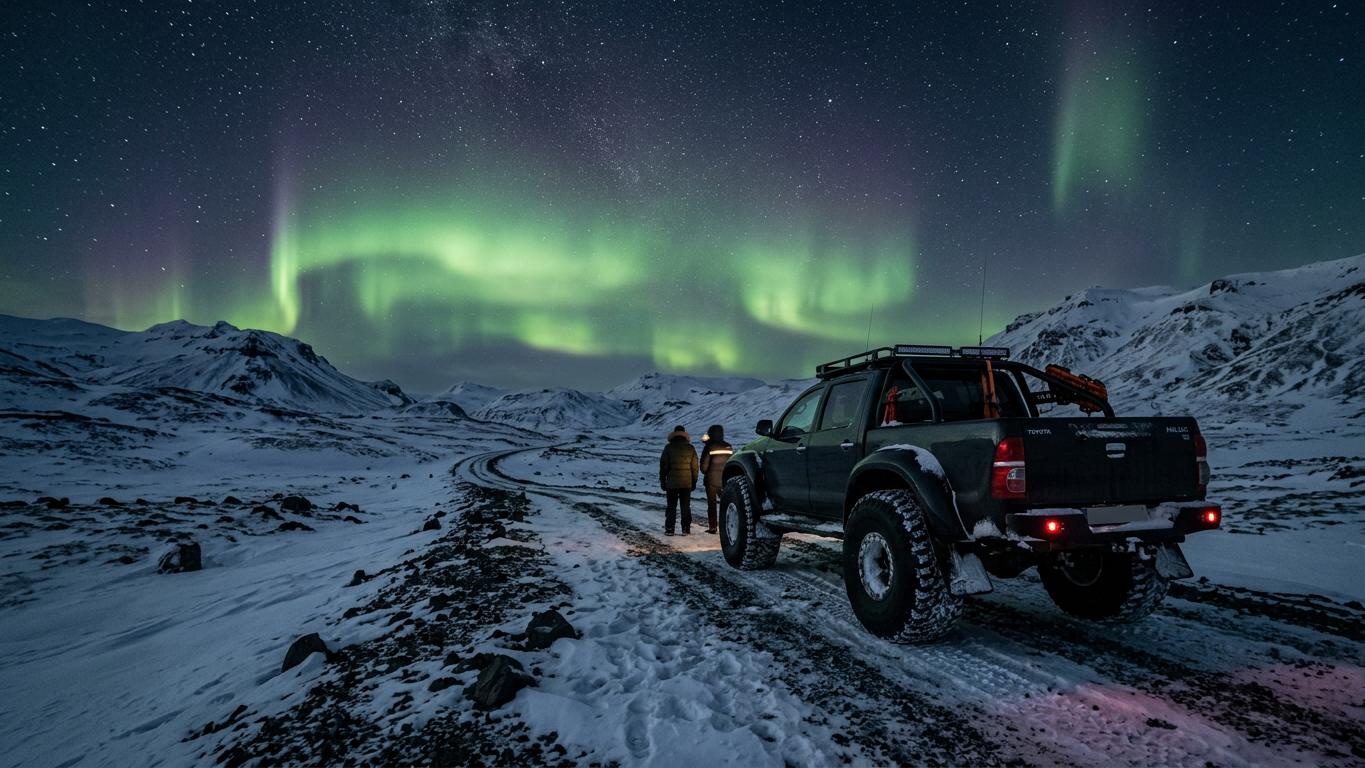
Those with more flexible budgets who want maximum access to remote locations should explore super jeep options, which can navigate off-road terrain and reach areas completely inaccessible to standard coaches.
Frequently asked questions
How long does a typical northern lights bus tour from Reykjavik last and what time do they usually leave?
Most northern lights bus tours last four to five hours including pickup time. Departures typically begin between 8pm and 9pm during winter months, with pickup taking 30 to 45 minutes as the coach collects passengers from multiple designated stops across Reykjavik. You'll usually return to your drop-off point between midnight and 1am.
Will the bus tour get me closer to the northern lights than staying in Reykjavik?
Yes, the tour takes you away from Reykjavik's light pollution to darker rural areas where the aurora is more visible. The city's artificial lights make it difficult to see faint auroras, while locations 30 to 60 minutes outside the capital offer much darker skies. However, the aurora itself occurs at altitudes of 90 to 150 kilometers, so your ground location only affects visibility, not proximity.
What happens if the northern lights don't appear on my bus tour?
Most operators offer a free retry or the option to reschedule for another night if the aurora doesn't appear during your tour. You'll need to contact the company within a day or two to arrange your second attempt. This policy provides some insurance against poor weather or low solar activity, though specific terms vary by operator.
How many people are typically on a northern lights coach tour compared to a minibus tour?
Standard coach tours typically carry 40 to 50 passengers in a full-size tourist bus. In comparison, minibus tours cap groups at 15 to 19 people. The larger coach groups are more budget-friendly but offer less flexibility and personalized attention from guides.
Can a northern lights bus tour go to the same remote locations as super jeep tours?
No, coaches must stay on paved roads like Route 1 and main highways because they lack four-wheel drive and ground clearance. Super jeeps can access gravel F-roads, highland tracks, and remote areas completely off-limits to standard buses. However, many excellent viewing locations are accessible by coach, and the aurora is visible from anywhere with dark, clear skies.
Do I need to know exactly which hotel I'm staying at to book a northern lights bus tour from Reykjavik?
You don't always need hotel pickup. Most operators use designated pickup points at major hotels and central locations throughout Reykjavik, and you can select the stop nearest your accommodation. Some hotels are not on standard routes, so you may need to walk a few blocks to the closest designated point.
Is it worth taking a northern lights bus tour in September or should I wait until deeper winter?
September tours can be successful because the aurora season begins in late August when darkness returns to Icelandic nights. However, September typically has milder weather and less snow, which changes the landscape atmosphere compared to winter months. Peak viewing occurs from November through February when nights are longest, but September offers the advantage of more moderate temperatures.
How much warmer is it inside the bus compared to standing outside watching for northern lights?
Coaches maintain comfortable heating inside, typically around 18 to 22 degrees Celsius, while outside winter temperatures range from minus 5 to plus 5 degrees Celsius. You'll spend 20 to 40 minutes outside at each viewing stop, then warm up in the heated bus during drives between locations. Dress in layers so you can adjust your clothing when moving between environments.