Darkness Hours and Aurora Chances in January
January provides between 18 and 19 hours of darkness per night across most of Iceland. Civil twilight ends around 11:00 and begins again near 09:00, giving you a substantial window for aurora activity. The KP index required for visible displays can be as low as 0 to 2 in this kind of darkness, meaning even modest geomagnetic activity produces visible auroras.
Solar activity follows an 11-year cycle, and the peak years within that cycle increase your statistical chances. However, January's extended darkness compensates significantly regardless of the solar cycle phase. The Icelandic Met Office aurora forecast becomes your essential daily tool, showing cloud cover predictions alongside aurora activity levels.
Understanding the best time to see northern lights in Iceland across the full season helps you appreciate January's particular strengths: maximum darkness combined with mid-season statistical reliability.
January Weather Patterns and Temperature
January temperatures in Reykjavik typically range from -3°C to +2°C, though the wind chill often makes it feel considerably colder. Coastal areas remain milder than inland regions due to the Gulf Stream's influence. Interior highlands and northern areas regularly drop to -10°C or below, particularly on the clear nights that favor aurora viewing.
Cloud cover presents the primary challenge. Atlantic weather systems bring frequent overcast conditions, rain, sleet and occasional snow. However, January also experiences high-pressure systems that settle over the country for several days, bringing stable, clear skies. These periods deliver exceptional viewing conditions. Tour operators monitor the northern lights forecast in Iceland continuously and adjust routes to chase clear patches.
Wind speeds average 5 to 15 meters per second in coastal areas, with stronger gusts during storms. Inland areas and valleys often have calmer conditions, making locations like Thingvellir National Park particularly appealing when coastal regions face poor weather.
Book Your January Northern Lights Tour
More tours on GetYourGuideWhat to Wear for January Aurora Tours
Layering becomes critical in January. You'll stand relatively still during viewing periods, allowing cold to penetrate inadequate clothing quickly. Start with thermal base layers made from wool or synthetic materials that wick moisture. Add an insulating mid-layer of fleece or down, then finish with a windproof and waterproof outer shell.
Your extremities need particular attention. Insulated, waterproof winter boots with good traction handle icy conditions. Bring two pairs of gloves: thin liners for camera operation and thick mittens for warmth between shots. A wool or fleece hat that covers your ears is essential, along with a neck gaiter or scarf. Many visitors underestimate how cold prolonged standing becomes, even when daytime temperatures feel manageable.
Hand warmers and toe warmers provide extra insurance. Most northern lights bus tours from Reykjavik include heated vehicles, but you'll spend 30 to 60 minutes outside at each viewing location.
Tour Options Operating in January
January sees the full range of tour types operating from Reykjavik. Standard bus tours accommodate budget-conscious travelers and typically visit locations within 30 to 60 minutes of the city. Operators favor spots like Thingvellir, approximately 45 minutes east, or coastal viewpoints along the Reykjanes Peninsula.
Those seeking flexibility often choose super jeep northern lights tours, which can access remote locations and navigate winter road conditions more effectively. These modified 4x4 vehicles reach areas standard buses cannot, increasing your chances of escaping urban light pollution and finding clear skies.
Water-based viewing via northern lights boat tours from Reykjavik operates when sea conditions permit. Faxaflói Bay offers minimal light pollution, though January's rougher seas mean cancellations occur more frequently than in autumn. Tours typically include warm overalls and shelter from wind.
Photographers benefit from specialized northern lights photography tours in Iceland that provide tripods, camera settings assistance and longer stops at each location. Group sizes on these tours remain smaller, giving you space to set up equipment properly.
Combining Northern Lights with Daytime Activities
January's limited daylight (approximately 5 to 6 hours) still allows time for daytime exploration. Many visitors book Golden Circle tours during the day, visiting Thingvellir National Park, Geysir geothermal area and Gullfoss waterfall, then continue to golden circle and northern lights tours that extend into the evening for aurora viewing.
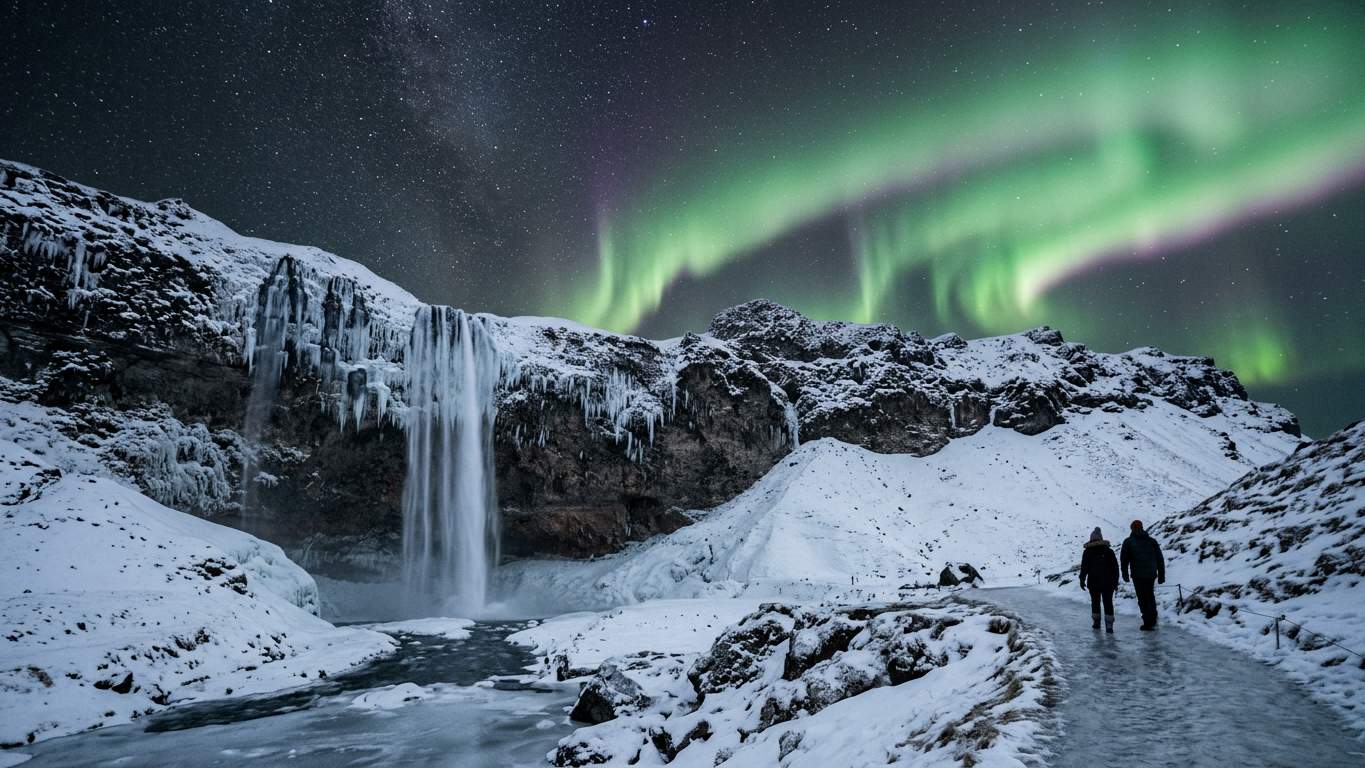
The south coast of Iceland offers dramatic winter landscapes with Seljalandsfoss and Skógafoss waterfalls often partially frozen. Tours that combine daytime south coast sightseeing with evening aurora hunting maximize your day, though they result in long trips of 12 to 14 hours total.
Soaking in geothermal pools after aurora viewing appeals to many. Tours that pair northern lights with hot springs typically visit locations like the Secret Lagoon or Sky Lagoon, where you can warm up after standing in the cold. January's winter conditions make the contrast between frigid air and warm water particularly satisfying.
January Events and Practical Considerations
Reykjavik remains quieter in January compared to summer peak season, though winter aurora tourism has grown substantially. Accommodation prices drop outside the Christmas and New Year period, and restaurant reservations become easier to secure. Most attractions and services operate normally, though some highland roads remain closed until late spring.
Daylight activities work best between 11:00 and 16:00, when the sun reaches its highest angle. Photography during civil twilight produces dramatic blue-hour images, particularly when combined with Iceland's winter landscapes. Plan your schedule to rest in the afternoon before evening tours, as most aurora trips depart between 20:00 and 21:00 and return between midnight and 02:00.
Rental cars require winter tires, and many roads demand 4x4 vehicles. Driving conditions can deteriorate rapidly during storms. If you plan to self-drive rather than join tours, monitor weather and road conditions constantly via the Icelandic Met Office and road.is. Many visitors opt for viewing northern lights in Reykjavik itself during marginal weather, when leaving the city offers little advantage.
Frequently asked questions
What are the chances of seeing the northern lights in Iceland in January?
January offers some of the season's best statistical chances due to 18 to 19 hours of darkness per night. Clear sky periods combined with even modest aurora activity (KP 0-2) produce visible displays. Weather remains the primary variable, with cloud cover affecting roughly 60 to 70 percent of nights, though tour operators actively chase clear patches.
How cold does it get in Iceland in January for northern lights viewing?
Coastal areas including Reykjavik typically range from -3°C to +2°C, while inland and northern regions often reach -10°C or colder. Wind chill makes temperatures feel significantly lower, particularly during the 30 to 60 minutes you spend standing still outdoors. Proper layering with thermal base layers, insulation and windproof outer shells becomes essential for comfort.
Can I see the northern lights from Reykjavik in January or do I need to take a tour?
You can see auroras from darker areas within Reykjavik during strong displays, particularly from the coastline or higher elevation neighborhoods. However, tours travel to locations with less light pollution and actively chase clear skies, significantly increasing your success rate. Tours also provide transportation during winter road conditions and expert guidance on aurora forecasting.
What time do northern lights tours depart in January in Iceland?
Most tours depart between 20:00 and 21:00, returning between midnight and 02:00, giving operators time to check updated forecasts and drive to optimal viewing locations. The extended darkness means auroras can appear any time after civil twilight ends around 23:00, though activity often peaks between 22:00 and 02:00.
Is January a better month than December or February for northern lights in Iceland?
January offers nearly identical darkness hours to December but avoids the holiday crowds and higher prices. February brings slightly more daylight but still provides 16 to 17 hours of darkness. January sits in the statistical middle of the season, offering a good balance between maximum darkness and manageable tourist numbers.
What should I pack for a northern lights tour in Iceland in January?
Pack thermal base layers, insulating mid-layers, waterproof outer shells, insulated winter boots with traction, warm gloves or mittens, wool hat and neck protection. Bring hand warmers, a headlamp with red light mode for night vision, and camera batteries (which drain quickly in cold). Dress as if you'll stand still outdoors for an hour in wind.
Do northern lights tours run every night in January in Iceland?
Tours operate nightly throughout January unless weather conditions make travel unsafe. However, operators cancel or reschedule when cloud cover blankets all accessible areas or when storms create dangerous road conditions. Most companies offer free rebooking if they cancel a tour, and many allow you to reschedule if the forecast looks particularly poor.
How long does a northern lights tour from Reykjavik take in January?
Standard tours last 4 to 6 hours total, including 1.5 to 2 hours of driving and stops at two or three viewing locations. Tours that combine auroras with daytime activities like the Golden Circle or south coast extend to 10 to 14 hours. Small group and private tours offer more flexibility in duration depending on conditions and your preferences.