What You See and Do on a Combined Tour
The daytime portion follows the classic Golden Circle route, departing Reykjavik in the morning. Thingvellir National Park lies about 45 minutes from the capital and offers views of the rift valley where the North American and Eurasian tectonic plates meet, with a walking trail through the Almannagjá gorge and the site of Iceland's ancient parliament. The park has minimal light pollution, making it a potential aurora viewing location after dark.
Next, tours visit the Geysir geothermal area in Haukadalur valley, about 50 minutes further east. The original Geysir geyser is mostly dormant, but Strokkur erupts every 5 to 10 minutes, shooting water 15 to 30 metres into the air. The site includes steaming fumaroles, bubbling mud pots, and colorful mineral deposits across approximately 3 square kilometres.
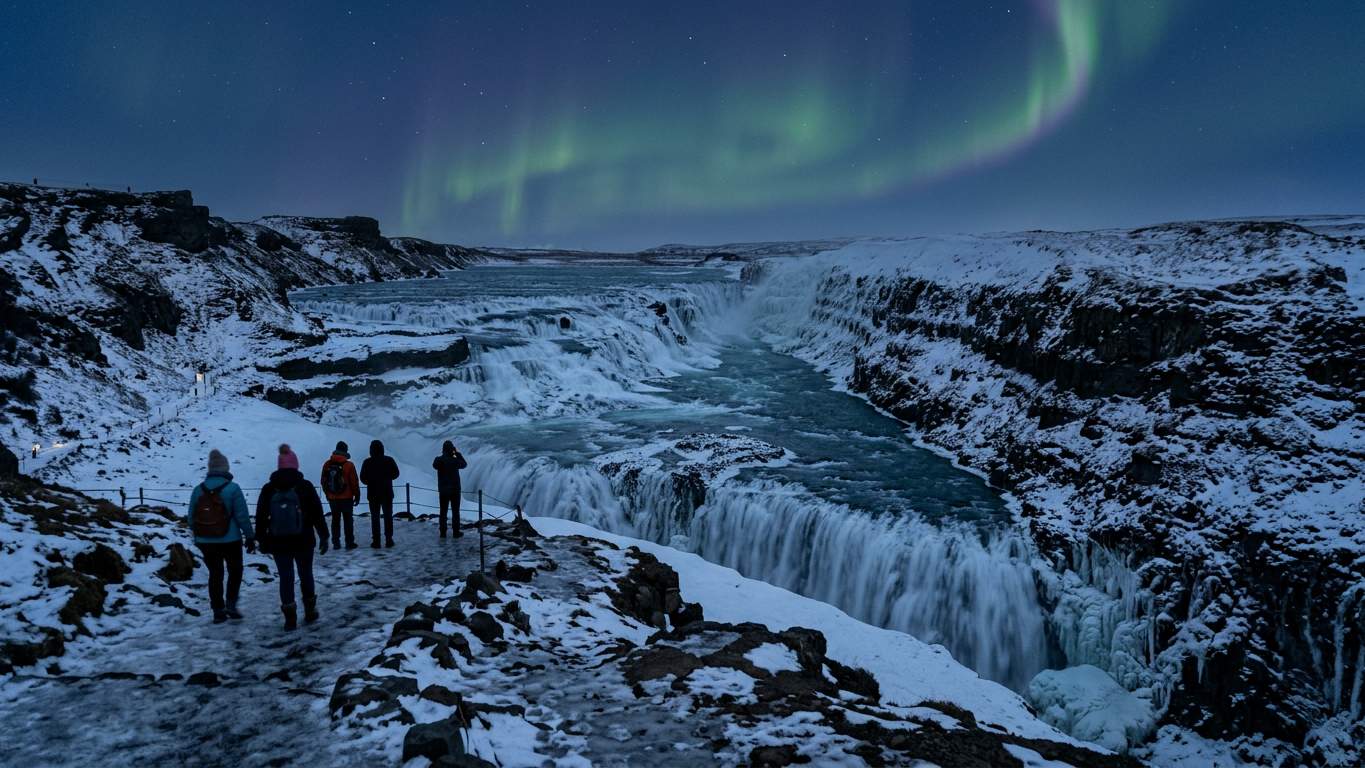
Gullfoss waterfall sits 10 minutes beyond Geysir, where the Hvítá river drops 32 metres in two cascading tiers into a narrow canyon. You walk along viewing platforms on the southern rim, with spray often creating rainbows on sunny days. The waterfall flows at an average rate of 140 cubic metres per second in summer, less in winter when ice forms around the edges.
After the Golden Circle sites and dinner break (usually in Selfoss or on the route back), the evening transitions to aurora hunting. Most operators check the aurora forecast and cloud cover predictions from vedur.is before selecting a viewing location away from Reykjavik's light pollution.
How the Day Structure Works
Combined tours typically run 10 to 14 hours total. Pickup from Reykjavik accommodation starts between 08:00 and 09:00, with the Golden Circle portion lasting until late afternoon. Tours include stops of 30 to 60 minutes at each major site, plus a meal break at a restaurant or service area.
The evening aurora segment begins after sunset, which ranges from around 15:30 in December to 22:00 in late August. The timing gap between daylight activities and full darkness varies by season. In midwinter, you may head straight to a northern lights location from Gullfoss. In September or March, there may be a longer wait or return partway toward Reykjavik before darkness is sufficient for aurora viewing.
Most operators spend 1 to 3 hours at northern lights locations, sometimes visiting multiple spots if clouds obscure the first choice. The aurora season runs from late August to mid-April, with complete darkness required for visibility. Return to Reykjavik usually occurs between 22:00 and midnight, depending on aurora activity and weather conditions.
Book a Golden Circle and Northern Lights Tour
More tours on GetYourGuideTour Formats and Vehicle Types
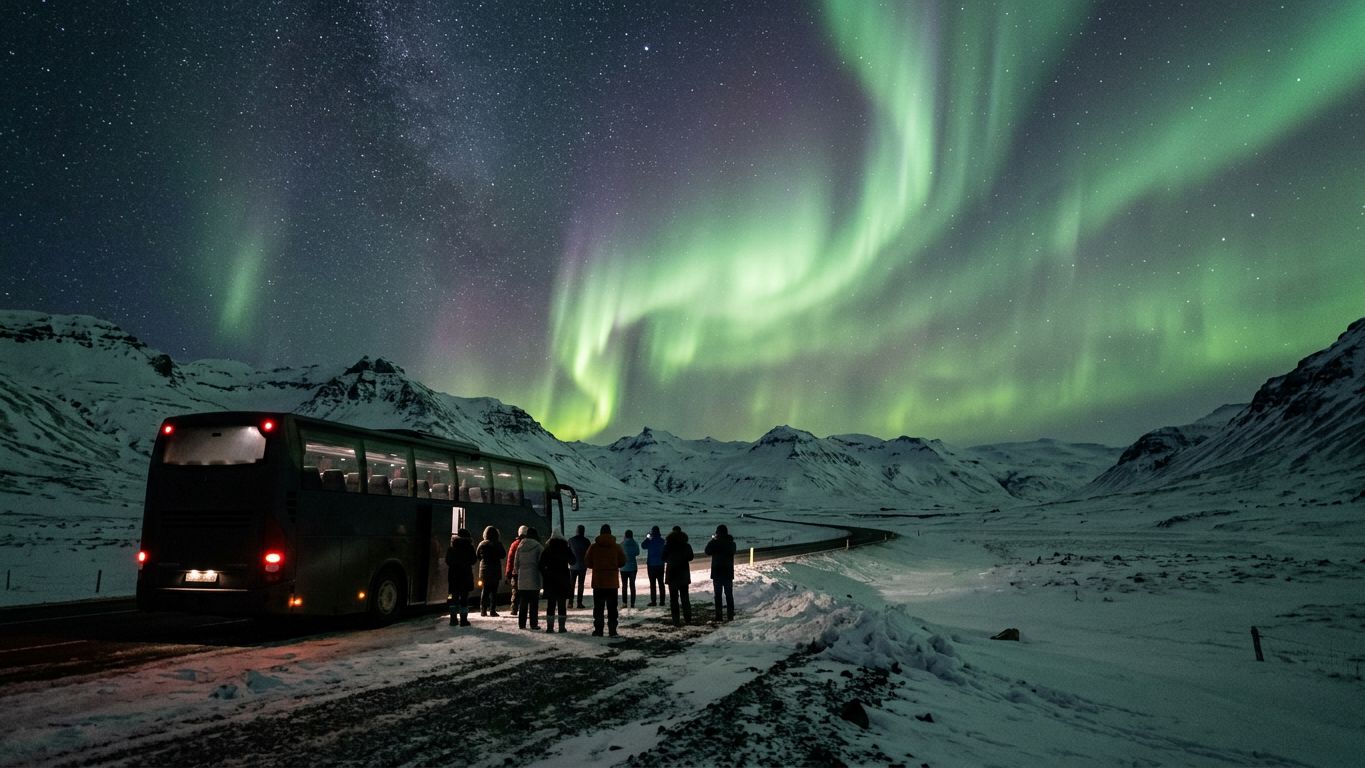
Budget-tier combined tours use full-size coaches carrying 40 to 50 passengers. These offer the lowest per-person cost but less flexibility to reach remote aurora viewing spots if main roads have poor visibility. Mid-range options run minibuses with 19 to 25 seats, allowing access to secondary roads and slightly more personalized commentary.
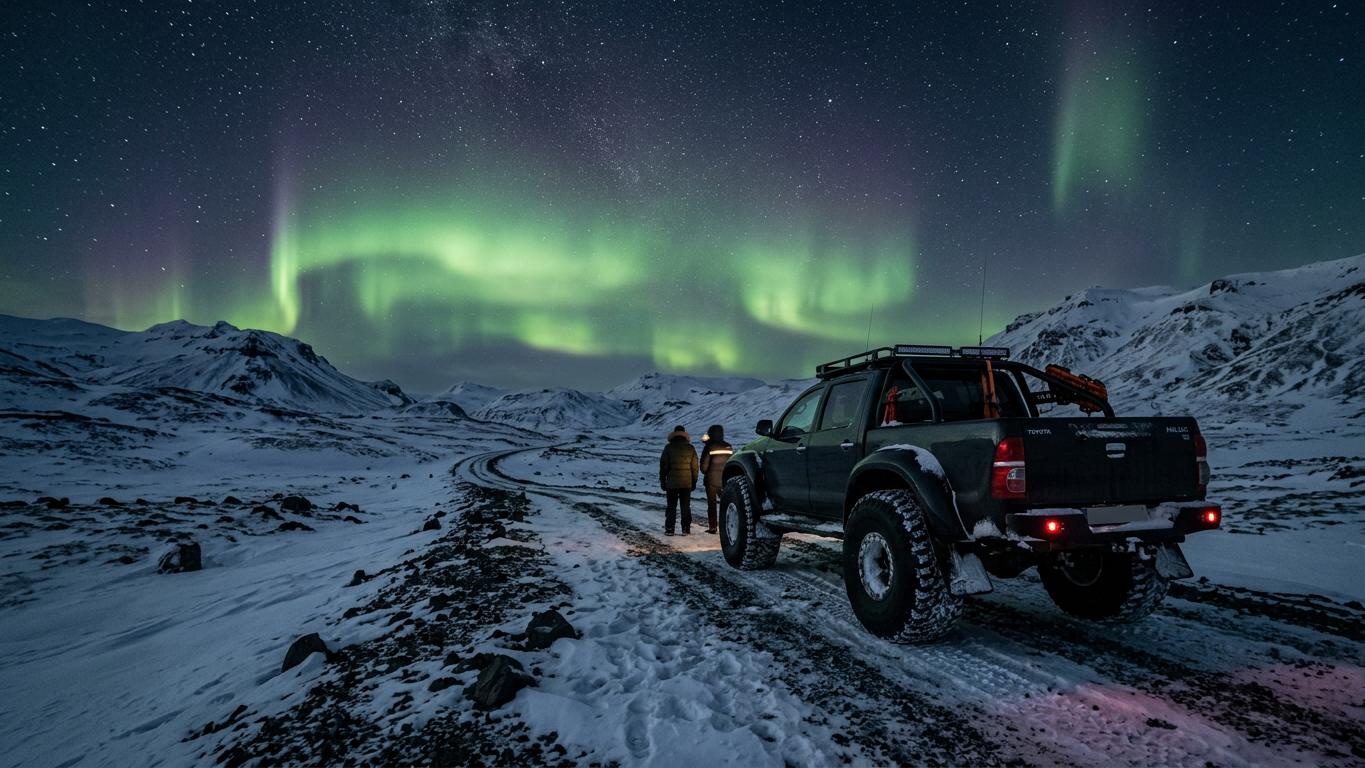
Premium small-group tours limit capacity to 8 to 15 passengers in minibuses or minivans. Some operators use modified four-wheel-drive vehicles that can navigate unpaved highland tracks, though these are more common on dedicated northern lights tours than combined formats. Private tours offer the most flexibility, adjusting the pace and stops to your preferences and chasing clear skies without waiting for group consensus.
Most combined tours include an English-speaking guide, though some budget options use audio guides for the daytime portion. The guide monitors aurora and weather forecasts throughout the day and makes real-time decisions about evening viewing locations based on the KP index (geomagnetic activity scale from 0 to 9) and cloud cover predictions.
Who Benefits Most from This Tour Type
Combined tours suit visitors with limited time in Iceland who want to cover major landmarks and experience aurora hunting in a single day. If you have only two or three days in the country, this format maximizes efficiency. First-time visitors often choose this option to see the Golden Circle sites without booking separate day and evening excursions.
The long duration works better for travelers comfortable with extended time on a bus and irregular meal timing. The pace is faster than booking a dedicated Golden Circle tour and a separate northern lights tour on different days. You spend less time overall, but each stop is shorter and the day feels compressed.
This format is less ideal if you prefer in-depth exploration of individual sites or want to stay longer at Gullfoss or Thingvellir. Dedicated Golden Circle tours often allocate more time at each location and may include additional stops like Kerið crater or Faxi waterfall. Similarly, standalone northern lights tours typically offer more flexible aurora hunting without the constraint of an already-long day.
Seasonal Considerations
The tour operates only during aurora season, from late August through mid-April. December and January offer the longest darkness windows, with only 4 to 5 hours of daylight, allowing earlier aurora viewing but also limited time at Golden Circle sites under natural light. Roads may be icy, and Gullfoss can be partially frozen.
September and March provide milder weather and more balanced daylight, with sunset around 19:00 to 20:00 in September and 18:00 to 19:00 in March. The shoulder months offer better road conditions and more comfortable temperatures for walking at outdoor sites, though aurora viewing starts later in the evening. October, November, and February fall between these extremes.
Weather variability affects both portions of the tour. Cloud cover can obscure Gullfoss and prevent aurora sightings on the same day. Some operators offer a free repeat northern lights tour if the aurora doesn't appear, though this typically applies only to the evening segment and requires availability on another night during your stay.
Practical Details
Most combined tours include pickup and drop-off at Reykjavik hotels and designated bus stops, though some properties in the city center require meeting at a nearby collection point. Operators usually provide a pickup window rather than an exact time, with the full route taking 30 to 60 minutes before departure from the city.
The standard ticket price covers transportation and guiding for both segments. Meals, drinks, and optional activities are extra. You should bring waterproof outer layers, warm mid-layers, sturdy shoes with grip for icy or uneven ground, hat, and gloves. Daylight temperatures in winter range from -5°C to +5°C, but wind chill near Gullfoss can make it feel much colder.
Tour operators normally provide a dinner stop at a restaurant or cafeteria, where you pay for your own meal. Some premium tours include dinner as part of the package. The break typically lasts 45 to 60 minutes. You may want to bring snacks for the long day, especially if you have dietary restrictions that limit restaurant options.
Cancellation policies vary by operator. Weather-related cancellations decided by the company usually result in a full refund or rebooking. If the tour departs but aurora doesn't appear due to clouds or low geomagnetic activity, some operators offer a free repeat aurora hunt, while others do not, since the daytime Golden Circle portion was completed.
Alternatives to Consider
If the combined format feels too rushed, splitting the experiences across two days allows more time at each Golden Circle site and a more relaxed aurora hunt. You can book a daytime Golden Circle tour and a separate evening northern lights bus tour or small-group northern lights tour on different nights.
Another option pairs Thingvellir with northern lights viewing, visiting the national park in late afternoon and staying for aurora hunting after dark. This shorter excursion focuses on one major site rather than the full Golden Circle loop. Some travelers combine the Golden Circle with a visit to a geothermal spa and northern lights, adding relaxation to the day.
For more extensive coverage, multi-day tours spread Golden Circle, South Coast, and other regions across several days with multiple aurora hunting opportunities. These reduce daily travel time and increase the statistical chance of clear skies on at least one night. If you prefer staying in Reykjavik and exploring independently, you can rent a car for the Golden Circle and join a guided northern lights tour from the city in the evening.
Frequently asked questions
How long does a golden circle and northern lights tour from Reykjavik take and what time does it finish?
Combined tours typically last 10 to 14 hours total, with pickup between 08:00 and 09:00 from Reykjavik. The daytime Golden Circle portion covers Thingvellir, Geysir, and Gullfoss, followed by a meal break and evening aurora hunting after dark. Most tours return to Reykjavik between 22:00 and midnight, depending on aurora activity, weather conditions, and the season.
Is a combined golden circle and northern lights tour worth it or should I book them separately?
Combined tours work well if you have limited time in Iceland and want to maximize efficiency by covering major sights and aurora hunting in one day. However, the pace is compressed and stops are shorter than dedicated tours. Splitting the experiences across two days allows more time at each Golden Circle site, a more relaxed aurora hunt, and better flexibility if weather affects one evening.
What is the best month to do a golden circle and northern lights tour in Iceland?
October, November, February, and March offer the best balance of aurora darkness and reasonable daylight for Golden Circle sightseeing. December and January provide the longest darkness windows but very short daylight and potentially icy roads. September has milder weather but later sunset, while April marks the end of aurora season with limited darkness.
What happens if the northern lights don't appear on a combined golden circle and aurora tour?
Policies vary by operator. Some offer a free repeat northern lights tour if aurora doesn't appear due to weather or low geomagnetic activity, though this only covers the evening segment and requires availability during your stay. Others do not offer repeats since the daytime Golden Circle portion was completed as scheduled regardless of evening aurora conditions.
Can you see the northern lights from the golden circle stops like Thingvellir or Gullfoss?
Yes, Thingvellir National Park and the Geysir-Gullfoss area have minimal light pollution and can offer excellent aurora viewing when conditions are favorable. However, dedicated aurora tours usually drive to locations with the clearest forecast rather than staying at tourist sites. Some combined tours return to these areas for evening viewing if the forecast is favorable there.
Do golden circle and northern lights tours include food and what should I bring?
Most tours include a dinner stop at a restaurant where you pay for your own meal, typically lasting 45 to 60 minutes. Premium tours may include dinner in the ticket price. You should bring waterproof and warm layers, sturdy footwear with grip for ice, hat, gloves, and snacks if you have dietary restrictions or want food available during the long day.
How many people are usually on a combined golden circle and northern lights tour?
Group size depends on the tour tier. Budget coaches carry 40 to 50 passengers, mid-range minibuses hold 19 to 25, and premium small-group tours limit capacity to 8 to 15 people. Smaller groups offer more flexibility for aurora hunting and reaching secondary viewing locations, while larger coaches have lower per-person cost but less adaptability.
Is it better to do a golden circle and northern lights tour in winter or autumn?
Autumn (September to November) offers milder weather, better road conditions, and more comfortable temperatures for walking at outdoor sites, though aurora viewing starts later in the evening. Winter (December to February) provides longer darkness windows for earlier aurora hunts but very short daylight at Golden Circle sites, colder temperatures, and potentially icy roads requiring more caution.